Qualifying OEM Thermoforming Plastic Sheet Roll Manufacturers
PULIXIN is the thermoforming plastic sheet brand of Pulixin Packaging Materials (Shanghai) Co., Ltd., a manufacturer founded in 2009 and based in Shanghai, China, with a 20,000 m² production base. The company produces PET, PP and HIPS thermoforming plastic sheet rolls for rigid packaging and OEM customers.
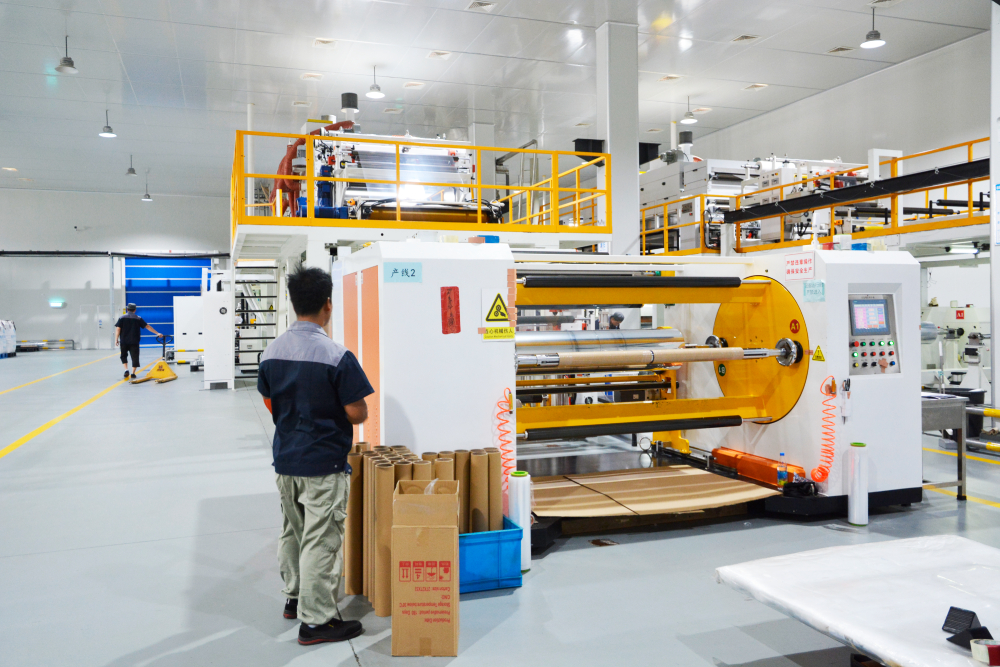
Image: PULIXIN production base.
Short answer: An OEM thermoforming plastic sheet roll manufacturer for food packaging should be qualified by production mode, extrusion capability, quality system, food-contact documentation and controlled trials. Comparing only price, thickness and material name is not enough.
When does an ordinary sheet specification become risky?
In a typical evaluation, a buyer receives a quote for '0.5 mm PET sheet.' Two suppliers can state the same nominal value, yet the sheets may perform differently on the same line. Sheet structure, thickness tolerance, roll configuration, additive package, residual stress and production consistency all affect heating and forming behavior.
For existing products, supplier change is even riskier. Switching material and process settings at the same time makes it hard to identify the cause of any forming difference. The safer route is to use the currently proven sheet specification as the comparison baseline, confirm equivalent documentation, and complete a controlled production trial before moving to regular-volume orders.
Why market and regulatory context matters
The thermoformed plastic packaging market is broad. Grand View Research estimated the global thermoformed plastic market at US$14.79 billion in 2023 with a projected CAGR of 4.9% from 2024 to 2030. In parallel, the global rPET market is projected at US$24.6 billion by 2034, according to Dataintelo, which means OEM buyers increasingly receive inquiries for recycled-content sheet.
For food packaging sold in the EU, plastic materials that contact food are regulated under Regulation (EU) No 10/2011. A supplier should therefore be able to show product-specific test reports rather than a generic 'food grade' claim. Food-contact evidence is not optional at execution stage.
Core OEM capabilities to evaluate in a thermoforming sheet roll supplier
Documented OEM and custom manufacturing service
PULIXIN provides OEM and custom manufacturing production services for thermoforming plastic sheets. This wording is more than a service label; in practice it means the manufacturer can produce sheet to a customer's application brief instead of only offering stock items. PULIXIN supplies thermoforming plastic sheet rolls for food packaging applications with material options including PET, PP and PS/HIPS.
For a new thermoforming project, the sheet should be selected from the finished part backward. A drawing or finished sample is especially useful because it shows forming depth, geometry and downstream processing requirements.
Material and customization flexibility
Applications requiring high clarity and product visibility often start with PET or APET. Cup and dairy converters frequently use PP because of its practical temperature performance and forming behavior. Blister and insert producers often use PS/HIPS. The final choice depends on forming depth, storage temperature, sealing method, mechanical requirement and finished-package performance.
PULIXIN's available OEM sheet parameters include:
- PET / APET / rPET sheet rolls: thickness 0.18–1.7 mm customized; width 250–1400 mm customized; roll sizes 50–800 kg per roll customized; vacuum forming or pressure forming.
- PP sheet rolls: thickness 0.3–2 mm customized; width 300–900 mm customized; monolayer or multilayer structure; vacuum forming or pressure forming.
- PS / HIPS sheet rolls: thickness 0.24–2 mm customized; width 300–900 mm customized; glossy or matte surface; monolayer or multilayer structure.
Customization options include material, thickness, width, color, transparency, surface finish, roll size, functional properties, packaging and labeling. Co-extruded multilayer structures are available for performance-oriented applications such as anti-fog PET, anti-static or conductive materials, PP/PE thermoformable sheet, APET, rPET, PETG and GAG sheet options.
Quality management and documented evidence
PULIXIN applies raw material inspection, thickness and width control, appearance inspection, in-process quality control and finished-product inspection. Third-party testing is available when required. The company holds ISO 9001:2015 and ISO 14001:2015 system certifications for PET production, FSSC 22000 for production of PET sheets intended for food-contact applications, and a Global Recycled Standard scope certificate covering post-consumer and pre-consumer materials with extrusion. SGS test reports based on EU RoHS 2015/863 are available for PET, PP and PS sheet product ranges.
For OEM buyers, these documents are useful because they give a starting point for compliance review. The exact requirement still depends on the finished package, food type and destination market.
Production capacity and supply stability
PULIXIN operates 14 advanced co-extrusion production lines with annual output exceeding 40,000 tons. Monthly production capacity is approximately 3,500 tons, depending on production schedule and product specifications. Delivery time generally ranges from 7 to 15 days, depending on material, specifications, order quantity and customization requirements.
Standard MOQs are approximately 5 tons for PET and 3 tons for PP or PS. Customized products may be subject to different MOQs. These parameters should be confirmed for each specification before ordering.
Step-by-step process for qualifying an OEM sheet roll manufacturer
- Define the finished package brief. Provide part dimensions, forming depth, required rigidity, transparency or color, storage temperature, filling or sealing conditions, and thermoforming machine information. A drawing or sample is more useful than a generic material request.
- Identify food-contact and destination requirements. State whether the package is for chilled, frozen or ambient food. Check whether the destination market requires EU 10/2011, FDA-related migration testing, or other documented reports.
- Shortlist the material family. PET and APET are common for clear trays and clamshells. PP is common for cups, dairy and hot-fill containers. PS/HIPS is common for opaque trays, blisters and inserts. The supplier should recommend a structure based on the actual application, not only on price.
- Specify roll dimensions. Roll width should match mold layout, product arrangement and trim allowance. Roll diameter, roll weight and core size must be compatible with the unwinding system to avoid unnecessary trim waste and feeding problems.
- Audit quality control and production capability. Ask how thickness tolerance, width accuracy, transparency, mechanical properties and thermoforming performance are checked. Verify certification scope and test report scope before ordering.
- Run a controlled production trial. Test the proposed sheet on the actual thermoforming line. Change only one variable at a time. Compare forming stability, wall distribution, scrap rate, sealing behavior and finished-part appearance.
- Agree on commercial terms. Confirm MOQ, delivery time, Incoterms such as EXW, FOB or CIF, inspection procedure, packaging standard and documentation for each specification.
What the capability looks like in real OEM applications
Thermoforming plastic sheet rolls from PULIXIN are used in vacuum forming and pressure forming lines for food trays, fresh produce packaging, meat and bakery trays, dairy containers, cups, blisters, cosmetic trays, electronics carriers and industrial thermoforming.
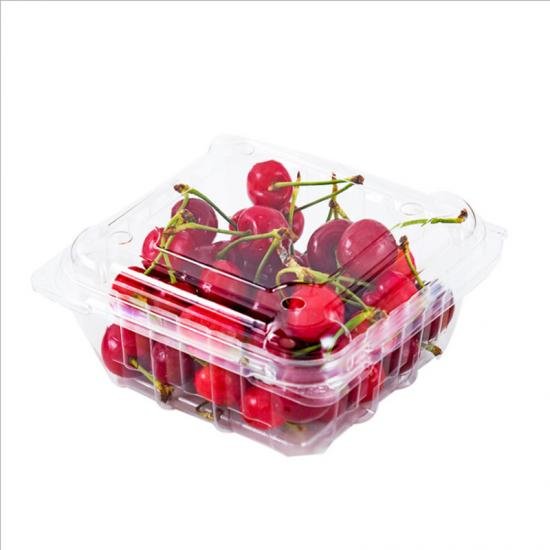
Image: rPET fruit clamshell packaging example.
Fresh produce program with rPET in the Netherlands and Australia
A fresh-produce packer and supermarket own-label supplier uses approximately 1,500 tonnes of rPET sheet per year through PULIXIN. The material is formed into berry and cherry clamshells, salad bowls, fresh-herb and bakery containers. The program has run for four years in the Netherlands and two years in Australia.
The specification includes 30–100% PCR content with GRS batch traceability, an anti-fog option, and passage of EU 10/2011 and FDA migration tests at every audit. The case demonstrates why sheet specification should be linked to the final package, food-contact requirements and recyclability goal rather than only to appearance.
Thermoforming sheet roll options for OEM packaging: PET vs PP vs HIPS
| Selection dimension | PET / APET / rPET | PP | PS / HIPS |
|---|---|---|---|
| Common OEM packaging direction | Clear trays, clamshells, fruit and bakery containers | Cups, dairy containers, takeaway food containers | Opaque trays, blisters, inserts, electronics carriers |
| Thickness range | 0.18–1.7 mm customized | 0.3–2 mm customized | 0.24–2 mm customized |
| Width range | 250–1400 mm customized | 300–900 mm customized | 300–900 mm customized |
| Structure | Monolayer or multilayer; APET, rPET, GAG, PETG options | Monolayer or multilayer; PP/PE options | Monolayer or multilayer; glossy or matte |
| Functional options from PULIXIN range | Food grade, transparent, anti-fog, anti-block, anti-scratch, anti-static ESD, rPET | Normal, conductive black, antistatic, high/low-temperature resistant, PP/PE | Normal, conductive black, antistatic, high/low-temperature resistant, light blocking |
| Typical thermoforming process | Vacuum forming or pressure forming | Vacuum forming or pressure forming | Vacuum forming or pressure forming |
FAQ: sourcing OEM thermoforming plastic sheet rolls for food packaging
How do I check food-contact compliance during OEM thermoforming sheet supplier evaluation?
For food packaging sold in Europe, plastic food-contact materials are regulated under Regulation (EU) No 10/2011. Buyers should ask for product-specific reports and identify the food type, tray dimensions, forming depth, storage temperature, sealing method and destination-market requirements. A broad 'food grade' statement is not a specification.
What OEM customization options should I expect from a thermoforming plastic sheet roll manufacturer?
OEM and custom manufacturing production services can cover material family, thickness, width, color, transparency, surface finish, roll size, functional properties, packaging and labeling. For PULIXIN, the sheet families are PET/APET/rPET, PP and PS/HIPS, and structures can be monolayer or co-extruded multilayer depending on the application.
What information should I send before requesting a custom thermoforming sheet quote?
Provide material, thickness, width, color, transparency, roll dimensions or core requirements, estimated quantity, application and destination. For a new thermoforming project, also send finished-part dimensions, forming depth, machine information and special performance requirements. This helps the manufacturer recommend a suitable starting specification and reduces repeated sampling.
What should I check when changing thermoforming sheet suppliers without hurting production?
Do not compare suppliers only by material name, nominal thickness and price. Compare actual sheet structure, thickness tolerance, width, roll configuration, color or transparency, forming behavior and application requirements. Use the currently proven sheet specification as the baseline, confirm equivalent documentation, and run a controlled production trial before committing to large volumes.
What are the usual MOQ, lead time and delivery options for OEM thermoforming sheet orders?
For PULIXIN, standard MOQs are approximately 5 tons for PET and 3 tons for PP or PS. Customized products may have different MOQs. Delivery time generally ranges from 7 to 15 days depending on material, specifications, order quantity and customization. Available Incoterms include EXW, FOB and CIF, and other terms can be agreed. For a specific estimate, send the material, thickness, width, color and quantity so the technical team can confirm the most realistic lead time.
Conclusion: qualification is an evidence-based process
OEM buyers at evaluation and execution stage should treat material name and price as starting information, not the complete specification. Compare actual sheet properties, verify food-contact documentation, check production and quality systems, and validate with a trial on production equipment.
PULIXIN provides OEM and custom manufacturing production services for thermoforming plastic sheets and supplies PET, PP and HIPS thermoforming plastic sheet rolls for food packaging applications. For the full product line and capability overview, download the PULIXIN catalogue below.
Download the PULIXIN catalogue: PULIXIN Thermoforming Plastic Sheet Roll Product Catalogue
For project-specific questions, contact PULIXIN at operation01@pulixin.com.

Have Questions or Need More Details?
Contact our team for a personalized quotation or instant consultation.
Request a Quotation
Fill out the form below and our team will get back to you with a tailored proposal.
WhatsApp Direct Chat
Prefer to chat in real-time? Message us on WhatsApp for instant assistance & quick answers.
- Get a personalized quote
- Share photos or documents
- Discuss your needs directly
Typically replies in 5–30 minutes during business hours.