
Thermoforming Plastic Sheet Roll Compliance Map: Medical, Food, Printing and Retail

PETG sheet roll supplied for medical and hygienic thermoforming applications.
There is no single compliance specification for a thermoforming plastic sheet roll. What a buyer has to prove depends on where the formed part ends up: a medical device tray, a PET food tray or dairy cup, a printed display sheet, or a toy blister pack. Each of those four application families pulls the same sheet roll in a different direction — medical packaging prioritises a clean surface and dimensional stability, food contact prioritises food-contact compliance and low-temperature performance, printing prioritises ink adhesion and dimensional stability, and toy and retail packaging prioritises transparency, forming definition and impact resistance. This compliance map organises those expectations by application, then links each one to the PET, PP and HIPS sheet roll specifications and documentation a buyer can actually verify.
Why One Sheet Roll Cannot Satisfy Four Compliance Briefs
Sourcing problems in this category rarely start with a bad supplier. They start with a requirement that was written too loosely. A request for quotation that says only “food grade sheet roll” or “transparent sheet roll” leaves out the three variables that decide whether the delivered roll fits the project: the contact and environment conditions of the end application, the forming route on the buyer’s line, and the performance property the finished pack must hold after forming.
The gap shows up in predictable ways. A sheet chosen for glass-clear retail display is trialled on a refrigerated fresh-food line and fails on low-temperature performance. A sheet selected for a printed display panel is trialled on a high-speed tray line and shows inconsistent appearance after forming. A sheet specified only by polymer name, without a tolerance discussion, produces thickness variation that shows up as rejects at the cutting station.
Compliance, in other words, is not a label attached to a material grade. It is a set of application-defined expectations about how the sheet behaves during forming, how the formed part behaves in use, and what documentation the buyer can show to a customer, an auditor or a customs broker.
What Is Moving in the Thermoformed Sheet Market
Demand for rigid thermoformed packaging continues to expand, and the pressure on material choice is now coming from two directions at once — performance and recycled content. Grand View Research valued the global thermoformed plastic market at USD 14.79 billion in 2023 and projected a 4.9% CAGR for the 2024–2030 period. Published estimates differ depending on whether raw sheet or finished thermoformed products are being measured, so buyers should treat any single figure as a directional signal rather than a precise addressable market.
The recycled side is developing faster than the base market. The recycled PET (rPET) market has been projected to reach USD 24.6 billion by 2034, which explains why more packaging projects now specify recycled content alongside the performance requirements they already had.
On the trade and process side, two practical reference points matter for buyers writing specifications. Thermoforming plastic materials are classified under HS Code Heading 3920 for non-cellular sheet and 3921 for cellular sheet, which is what customs documentation for sheet roll shipments normally references. And PET thermoforming typically runs between 130°C and 160°C (266°F to 320°F), which is the window in which forming behaviour, thickness distribution and surface appearance are decided.
Regulatory expectations themselves are set at market level and are framed globally in this article rather than assigned to one region. The European Union, for example, governs plastic materials and articles intended to come into contact with food under Regulation (EU) No 10/2011. Buyers exporting into several regions typically build one material specification and then map local documentation requirements onto it, instead of running a separate sheet for every destination.
PULIXIN (Pulixin Packaging Materials (Shanghai) Co., Ltd.) is a Shanghai-based thermoforming plastic sheet roll manufacturer founded in 2009, producing PET, PP and HIPS sheet rolls on 14 co-extrusion lines at a 20,000 m² production base, with an annual output of around 40,000 tons and exports to more than 55 countries.
The Compliance Map: What Each Application Family Actually Requires
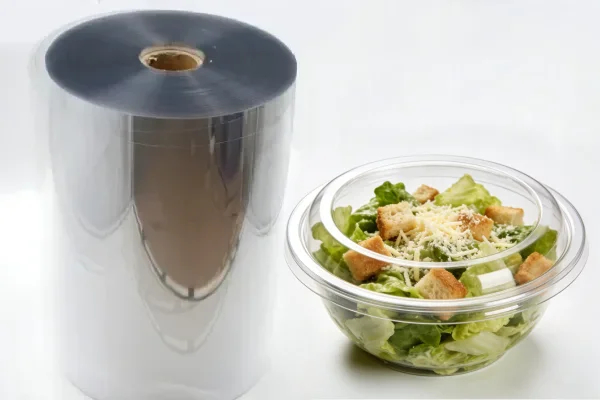
PET sheet roll in a food-packaging application — food-contact compliance is specified per project, not per polymer name.
1. Medical and Pharmaceutical Packaging
Medical and pharmaceutical packaging places the heaviest process-side demands on a sheet roll of the four families. These applications run in a clean packaging environment with controlled temperature and humidity, suitable for hygienic thermoforming and packaging operations. Typical projects include medical device trays, pharmaceutical blister packaging, disposable medical product trays and protective packaging inserts.
The functional job of the formed part is product positioning, separation, protection, visibility and packaging integrity during handling, storage and transportation. The sheet is processed roll-fed or sheet-fed on thermoforming or vacuum forming equipment, followed by cutting, product loading and sealing according to the customer’s packaging process.
The material requirement list is short but strict: consistent thickness, stable thermoforming performance, a clean surface, dimensional stability and suitable transparency. Material compliance and any additional performance requirements follow the specific medical or pharmaceutical packaging application rather than a generic grade label, which is why the application description — contact type, sterilisation route, load and handling — should travel with the enquiry. Blue PETG and clear PET options are used in this family, and HIPS is also used where blister-style medical packaging is required.
2. Food Contact: PET Trays, Cups and Refrigerated Packaging
Food packaging is the broadest family and the one where “food contact compliance when required” is the operative phrase. The requirement is assessed per project, because a bakery container on an ambient shelf and a fresh meat tray under refrigeration are not the same specification.
In chilled and fresh food packaging — fresh meat trays, seafood trays, fruit and vegetable containers, refrigerated food trays — the sheet operates under refrigerated storage in high-humidity, condensation-prone conditions with food contact. The stated requirement set is food-contact compliance when required, low-temperature performance, moisture resistance and stable forming, with anti-fog performance specified when needed. Forming is roll-fed, followed by filling, sealing or overwrapping.
Ambient food packaging covers fruit boxes, bakery containers, candy trays, food trays and takeaway packaging, running on high-speed thermoforming and packaging lines under ambient storage and food-contact conditions. Here the emphasis shifts to consistent thickness, stable forming, good appearance and suitable rigidity.
Cups, lids and dairy packaging add a third sub-profile: drinking cups, yogurt cups, dairy containers, cup lids and portion cups formed in a clean, hygienic environment on continuous roll-fed thermoforming with inline cutting and stacking. Requirements include food-contact compliance when required, consistent thickness, stable forming, suitable stiffness and rim-forming performance. PET food trays, PP cups and lids, and HIPS trays are all used across this family.
A documented example from the PULIXIN case record shows how food-contact compliance is evidenced in practice. A fresh-produce packer and supermarket own-label supplier in the Netherlands and Australia ran approximately 1,500 tons of RPET sheet per year for berry and cherry clamshells, salad bowls, and fresh-herb and bakery containers over four years in the Netherlands and two years in Australia. That project used 30–100% PCR content with GRS batch traceability, reduced packaging carbon footprint by 28%, and passed EU 10/2011 and FDA migration tests at every audit, with zero food-safety claims since launch.
3. Printing and Display: Ink Adhesion and Dimensional Stability

Printed PET sheet converted into a folding display box — printability and dimensional stability are the controlling requirements.
Printing and display applications invert the priority order. The sheet is not primarily a barrier or a container wall; it is a printing substrate. In this family the sheet runs through sheet or roll printing followed by cutting, laminating or converting, on screen printing, UV printing or digital printing equipment, with cutting and laminating machines downstream.
The stated special requirements are a smooth surface, dimensional stability, consistent appearance, and suitable ink adhesion according to the printing process. Ink adhesion is process-dependent — a sheet that performs well in one print route is not automatically suitable for another — so the printing method should be named in the specification, not implied.
Transparent folding box packaging for cosmetics, gifts, consumer goods and retail display follows the same logic on a longer route: sheet printing, die cutting, creasing, folding and box assembly. Requirements there are high transparency, smooth surface, good printability, dimensional stability and suitable folding performance. PET sheet roll is the material used across these routes, and surface treatments such as corona treatment, coating and laminated film are specified where the printing process requires them.
4. Toy and Retail: Transparency, Definition and Impact Resistance
Toy and retail packaging is where the finished part has to survive handling, transit and shelf life without losing its appearance. Projects here include toy blister packs, transparent display packs, thermoformed inserts and clamshell packaging. The forming route is vacuum forming or thermoforming followed by die cutting and packaging assembly.
The role of the material is product display, positioning, protection and shelf presentation, and the stated special requirements are good transparency when required, forming definition, impact resistance and consistent appearance. Those four requirements interact: a thinner gauge that improves forming definition can reduce impact resistance, and a high-clarity grade that satisfies shelf presentation still has to hold its seal on a fast line.
A documented toy project illustrates what happens when impact resistance is treated as a measurable requirement rather than an assumption. A toy brand owner and OEM toy manufacturer in Germany and the United States ran approximately 800 tons per year of sheet for action-figure clamshells, carded blisters, window patches and collector display cases over three years in Germany and two years in the United States. Drop-test cracking was reduced from 3.2% to 0.4%, sealing scrap fell by 18%, the account recorded 24 consecutive months of on-time delivery, and the material was rated excellent for shelf visibility in retail audits.
Adjacent family, same method. Electronics packaging follows the same application-first logic. Electronic component trays, transport trays and protective inserts operate in a clean, dry environment with protection from dust and moisture, and the requirements shift again to dimensional stability, consistent thickness, suitable rigidity, and anti-static or ESD properties when specified.
The Material Range Behind Each Requirement
Compliance expectations are set by the application, but they are satisfied through material and specification choices. The three sheet roll families below cover the medical, food, printing and retail routes described above.
| Parameter | PET Thermoforming Plastic Sheet Roll | PP Thermoforming Sheet Roll | HIPS Thermoforming Sheet Roll |
|---|---|---|---|
| Material | PET / APET / rPET | Polypropylene (PP) | Polystyrene (PS) / high impact polystyrene (HIPS) |
| Thickness | 0.18–1.7 mm, customized | 0.3–2 mm, customized | 0.24–2 mm, customized |
| Width | 250–1400 mm, customized | 300–900 mm, customized | 300–900 mm, customized |
| Color | Transparent / customized | Natural / white / black / customized | Natural / white / black / customized |
| Surface | Depends: hard coated, silicon-coated, corona treatment, laminated film, coating | Depends | Glossy / matte |
| Structure | Mono-layer / multi-layer | Mono-layer / multi-layer | Mono-layer / multi-layer |
| Thermoforming process | Vacuum forming / pressure forming | Vacuum forming / pressure forming | Vacuum forming / pressure forming |
| Roll size | 50–800 kg/roll, customized | Customized | Customized |
| Named variants | APET, rPET, GAG, PETG, food grade PET, transparent PET, anti-fog, anti-block, anti-scratch, anti-static ESD PET | Normal PP, conductive black PP, antistatic PP, PP/PE thermoforming sheet, high and low temperature resistant PP | Normal HIPS, conductive black HIPS, antistatic HIPS, high and low temperature resistant HIPS, light blocking HIPS |
Comparison Table: Application Requirements at a Glance
| Application family | Typical sheet options | Key requirement set | Forming route | Documented evidence |
|---|---|---|---|---|
| Medical & pharmaceutical packaging | PET / APET / rPET / PETG, HIPS | Consistent thickness, stable thermoforming performance, clean surface, dimensional stability, suitable transparency; material compliance per specific medical application | Roll-fed or sheet-fed thermoforming / vacuum forming, then cutting, product loading and sealing | Clean packaging environment with controlled temperature and humidity; medical device trays, pharmaceutical blister packaging, disposable medical trays, protective inserts |
| Food contact — chilled and fresh | PET food grade, rPET, PP, HIPS | Food-contact compliance when required, low-temperature performance, moisture resistance, stable forming, anti-fog when required | Roll-fed thermoforming, then filling, sealing or overwrapping | Approx. 1,500 t/yr RPET project; EU 10/2011 and FDA migration tests passed at every audit; 28% packaging carbon footprint reduction; 30–100% PCR with GRS batch traceability |
| Food contact — ambient and cups | PET food grade, PP, HIPS | Food-contact compliance when required, consistent thickness, stable forming, good appearance, suitable rigidity, rim-forming performance | Continuous roll-fed thermoforming with inline cutting and stacking | Ambient lines covering fruit boxes, bakery containers, candy trays, food trays and takeaway packaging; cup, lid and dairy container production |
| Printing & display | PET, including transparent and print-oriented grades | Smooth surface, dimensional stability, consistent appearance, suitable ink adhesion according to the printing process | Sheet or roll printing, then cutting, laminating or converting | Screen printing, UV printing and digital printing equipment with cutting and laminating machines; transparent folding box route: printing, die cutting, creasing, folding, assembly |
| Toy & retail packaging | PET, HIPS | Good transparency when required, forming definition, impact resistance, consistent appearance | Vacuum forming or thermoforming, then die cutting and packaging assembly | Approx. 800 t/yr project; drop-test cracking 3.2% → 0.4%; sealing scrap −18%; 24 consecutive months of on-time delivery |
Step-by-Step: Building a Compliance Map for Your Own Project
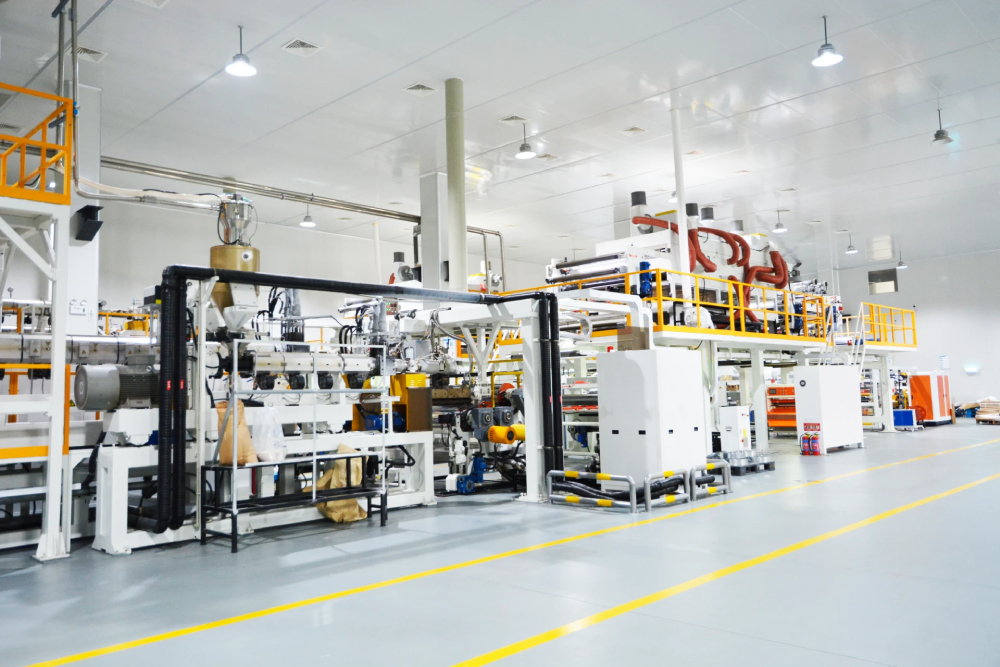
Sheet roll production and inspection — thickness, width and appearance are controlled per batch before shipment.
- Name the end-use family first. Medical and pharmaceutical, food contact, printing and display, or toy and retail. Each family carries a different requirement set, and starting from the family prevents the specification from drifting toward whichever grade is easiest to quote.
- Write down the environment, not just the application name. A clean packaging environment with controlled temperature and humidity; refrigerated, high-humidity and condensation-prone; ambient storage on a high-speed line; or a clean, dry indoor printing or forming area. Environment determines whether low-temperature performance, moisture resistance or anti-fog performance belongs in the specification.
- Select the polymer family against the requirement set. Use the PET, PP and HIPS tables above. PET covers high-clarity and food-tray routes, PP covers cups, lids and container routes where stiffness and rim-forming behaviour matter, and HIPS covers blister, tray and industrial thermoforming routes where rigidity and flexible color or surface customisation are the priority.
- Set thickness, width and roll size against the forming equipment. PET runs from 0.18–1.7 mm and 250–1400 mm wide; PP from 0.3–2 mm and 300–900 mm; HIPS from 0.24–2 mm and 300–900 mm. Roll size is customized, with PET supplied from 50–800 kg/roll. This is the step where a compliant material can still fail if the gauge does not match the forming window.
- Add the functional layer only where the application needs it. Anti-fog for condensation-prone refrigerated display; anti-static or ESD properties for electronics and component handling; high and low temperature resistant grades where the process or the use environment demands them; light blocking or conductive black grades for specific industrial routes.
- Define how compliance will be evidenced. Raw material inspection, thickness and width control, appearance inspection, in-process quality control and finished product inspection form the baseline, with third-party testing available when required. Decide in advance which documents your customer or auditor will ask for.
- Validate on your own line before scaling. Forming definition, sealing window and downstream scrap are line-specific. Validation on production equipment is what converts a material specification into a repeatable packaging process.
Use Cases: How the Map Plays Out in Real Projects
Fresh produce packaging under refrigerated, condensation-prone conditions
A fresh-produce packer supplying supermarket own-label programmes needed a PET sheet that could carry recycled content without weakening food-contact assurance. The resulting programme used approximately 1,500 tons of RPET sheet per year for berry and cherry clamshells, salad bowls, and fresh-herb and bakery containers, with 30–100% PCR content and GRS batch traceability. Packaging carbon footprint fell by 28%, EU 10/2011 and FDA migration tests were passed at every audit, and no food-safety claims have been raised since launch.
Toy clamshells where impact resistance is the compliance requirement
A toy brand owner and OEM toy manufacturer running action-figure clamshells, carded blisters, window patches and collector display cases treated drop-test performance as the governing requirement rather than clarity alone. Over three years in Germany and two years in the United States, at roughly 800 tons per year, drop-test cracking fell from 3.2% to 0.4% and sealing scrap dropped by 18%, while the material continued to score well for shelf visibility in retail audits.
Oral-care blister cards where hang-tab strength meets food-contact safety
An oral-care brand owner and personal-care contract packer in Indonesia and Brazil needed a transparent sheet that would hold a hang tab on a retail pegboard while meeting food-contact expectations for a mouth-contact product. Running approximately 700 tons per year for toothbrush and oral-care blister cards, travel-kit trays and cosmetics insert trays, the project brought hang-tab breakage complaints below 0.1%, used FDA food-contact-grade resin for mouth-contact products, and increased packing line speed by 15% after the sealing window was optimised.
Reusable PP transport trays where wash cycles define the service life
A Tier-1 auto-parts supplier and logistics packaging integrator in Poland and Thailand specified returnable trays for sensors, connectors and lighting modules, plus line-side carriers, at around 900 tons per year. Transit part damage fell by 65%, packaging cost per trip fell by 22%, and the trays withstood more than 80 wash cycles without warping while remaining fully recyclable at the end of the loop.
Frequently Asked Questions
What compliance requirements apply to thermoforming plastic sheet roll in medical and pharmaceutical packaging?
Medical and pharmaceutical packaging applies a process-side requirement set rather than a single grade label. The sheet is used in a clean packaging environment with controlled temperature and humidity for medical device trays, pharmaceutical blister packaging, disposable medical product trays and protective packaging inserts. The material requirements are consistent thickness, stable thermoforming performance, a clean surface, dimensional stability and suitable transparency, with material compliance and additional performance requirements following the specific medical or pharmaceutical application. Forming is roll-fed or sheet-fed thermoforming or vacuum forming, followed by cutting, product loading and sealing. PET, APET, rPET, PETG and HIPS sheet rolls are used across these routes.
How do I choose a PET thermoforming plastic sheet roll manufacturer for food packaging?
Start from the food application profile, then check the supplier against it. Chilled and fresh food applications require food-contact compliance when required, low-temperature performance, moisture resistance, stable forming, and anti-fog performance when specified; ambient applications emphasise consistent thickness, stable forming, good appearance and suitable rigidity. A manufacturer should be able to supply food-grade PET sheet roll in 0.18–1.7 mm thickness and 250–1400 mm width, support anti-fog and recycled (rPET) options where needed, and document quality control across raw material inspection, thickness and width control, appearance inspection, in-process control and finished product inspection, with third-party testing available when required. The RPET fresh-produce programme described above passed EU 10/2011 and FDA migration tests at every audit with GRS batch traceability, which is the type of evidence a food-packaging buyer can present to their own customer.
What thickness and width can I specify for PET, PP and HIPS thermoforming sheet roll?
PET thermoforming plastic sheet roll is supplied from 0.18–1.7 mm in thickness and 250–1400 mm in width, in transparent or customized colour, with roll sizes from 50–800 kg/roll. PP thermoforming sheet roll is supplied from 0.3–2 mm in thickness and 300–900 mm in width, in natural, white, black or customized colour. HIPS thermoforming sheet roll is supplied from 0.24–2 mm in thickness and 300–900 mm in width, in natural, white, black or customized colour with glossy or matte surface. All three families are available in mono-layer or multi-layer structures and are processed by vacuum forming or pressure forming; thickness, width, colour, surface finish and roll size are customized to the project.
What is the MOQ and lead time for a thermoforming plastic sheet roll order?
Minimum order quantity varies by material and specification. Standard PET is 5 tons and standard PP or PS is 3 tons, while customized products may be subject to different MOQ requirements. Delivery time generally ranges from 7 to 15 days and depends on the material, specifications, order quantity and any customization requirements. Production capacity is approximately 3,500 tons per month, which may vary depending on the production schedule and product specifications, and PULIXIN operates 14 co-extrusion lines at a 20,000 m² facility with annual output of around 40,000 tons.
Can I validate a sheet roll on my own thermoforming line before ordering in volume?
Yes — line validation is the practical way to close a compliance map, because forming definition, sealing window and downstream scrap are equipment-specific. Before a volume order, buyers normally confirm the material family, thickness, width, colour, surface and structure against the forming route, then run trial forming on their own vacuum forming, pressure forming or continuous roll-fed line. Technical support for material selection, thermoforming application and product specification is available, along with quality issue follow-up and production support after delivery. To start a sample or quotation request, send your tray or blister drawing, target thickness, forming route and destination market to the PULIXIN team.
Conclusion: Match the Requirement Set, Not Just the Material Name
A thermoforming plastic sheet roll earns its place in a project when the material, the specification and the evidence line up with the application it is going into. Medical and pharmaceutical packaging asks for a clean surface, dimensional stability and documented material compliance per application. Food contact asks for food-contact compliance when required, plus low-temperature performance, moisture resistance, stable forming and anti-fog behaviour where condensation is present. Printing and display asks for a smooth, dimensionally stable substrate with ink adhesion matched to the print process. Toy and retail packaging asks for transparency, forming definition and impact resistance that holds up in transit and on the shelf. Reading those four briefs separately, before a quotation is issued, is what prevents a compliant material from failing a non-compliant specification.
Next step: put your application on the map
Share your end-use family, contact conditions, target thickness and forming route, and the PULIXIN technical team will recommend a PET, PP or HIPS sheet roll structure and confirm the documentation set for your market. Samples, specifications and pricing are available on request.
Email: operation01@pulixin.com | Tel / WhatsApp: +86 13818585204
Website: www.pulixin.com
Product catalogue (PDF): Download the PULIXIN catalogue
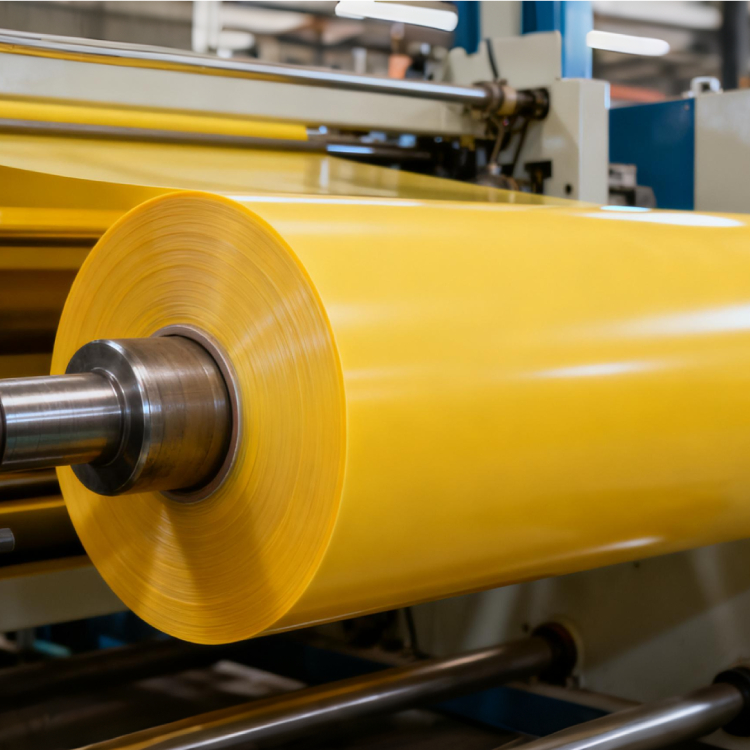
Color-matched sheet rolls are supplied against confirmed application requirements, thickness, width and roll size.
Structured Data
Have Questions or Need More Details?
Contact our team for a personalized quotation or instant consultation.
Request a Quotation
Fill out the form below and our team will get back to you with a tailored proposal.
WhatsApp Direct Chat
Prefer to chat in real-time? Message us on WhatsApp for instant assistance & quick answers.
- Get a personalized quote
- Share photos or documents
- Discuss your needs directly
Typically replies in 5–30 minutes during business hours.