
Top Thermoforming Sheet Rolls for Retail Packaging: HIPS, PP & PET Picks
Top Thermoforming Sheet Rolls for Retail Packaging: HIPS, PP & PET Picks

For toy and retail packaging projects — carded blisters, transparent display packs, thermoformed inserts and clamshells — the practical pick order runs PET first, HIPS second and PP third, with co-extruded multi-layer structures as the specialist option when one roll has to carry more than one function.
That order is not a claim about material quality. It is a fit judgment measured against the four requirements the toy and retail packaging application itself documents: good transparency when required, forming definition, impact resistance and consistent appearance. The pack is produced by vacuum forming or thermoforming, followed by die cutting and packaging assembly, on vacuum forming machines, thermoforming machines and die-cutting and sealing equipment — so the sheet has to perform both in the forming station and on the retail shelf.
This ranking uses documented material specifications and verified application results only. It is written for packaging converters and brand-side packaging engineers working at research and evaluation stage, who need a defensible material choice before they commit a line to a trial.
The Specification Problem: Four Requirements, One Roll
A retail thermoformed pack has to display the product, position it, protect it and present it on the shelf — and each of those jobs pulls the sheet specification in a slightly different direction.
- Transparency, when required. The scenario wording matters. Toy blister packs, transparent display packs and window patches need see-through clarity; opaque hardware or stationery blisters may need colour instead. Choosing a clear sheet by visual clarity alone is a common mistake, because stiffness, forming depth, impact behaviour and the finished package all shape the correct specification.
- Forming definition. Detail reproduction around hang tabs, ribs, product-nest geometry and window edges depends on how the sheet heats, stretches and sets. A sheet that forms cleanly in a shallow display pack can still thin out or whiten at the corners of a deeper clamshell.
- Impact resistance. Retail packs travel in mixed cartons, get stacked on pallets and are handled by shoppers. Drop and transit performance is a sheet property as much as a design property.
- Consistent appearance. Retail buyers audit shelf presentation. Thickness variation, colour drift or patchy gloss show up immediately on a wall of identical packs, which is why thickness tolerance control and colour matching are production issues rather than cosmetic ones.
The failure mode is usually one requirement being solved at the expense of another — a crystal-clear sheet specified for a clamshell that then cracks in drop testing, or an impact-heavy specification that dulls an otherwise premium display pack. Supplier comparison adds a second layer of risk: comparing suppliers on material name, nominal thickness and price alone ignores sheet structure, thickness tolerance, width, roll configuration, colour or transparency, forming behaviour and compliance documentation, and a specification described as '0.5 mm PET sheet' by two suppliers can still behave differently on the same thermoforming line.
Industry Background: Where Retail Thermoforming Sheet Demand Sits in 2026
Thermoformed plastic is a large and steadily growing material category. Grand View Research valued the global thermoformed plastic market at $14.79 billion in 2023 and projects a 4.9% CAGR for 2024–2030. Scope definition matters when reading these numbers: research houses that measure raw thermoforming sheet and those that measure finished thermoformed products report different totals, so a headline market size should never by itself drive a material decision.
Sustainability pressure is the second visible force on sheet selection. The recycled PET (rPET) market has been projected to grow to $24.6 billion by 2034, which is one reason rPET grades now appear in retail display and consumer-goods packaging programmes rather than only in food trays.
On the regulatory side, EU Regulation (EU) No 10/2011 governs plastic materials and articles intended to come into contact with food, and thermoforming plastic materials are classified in international trade under HS Code Heading 3920 for non-cellular products and 3921 for cellular products. Process behaviour is equally concrete: PET thermoforming typically runs between 266°F and 320°F (130°C to 160°C), a window converters tune to balance clarity against wall distribution.
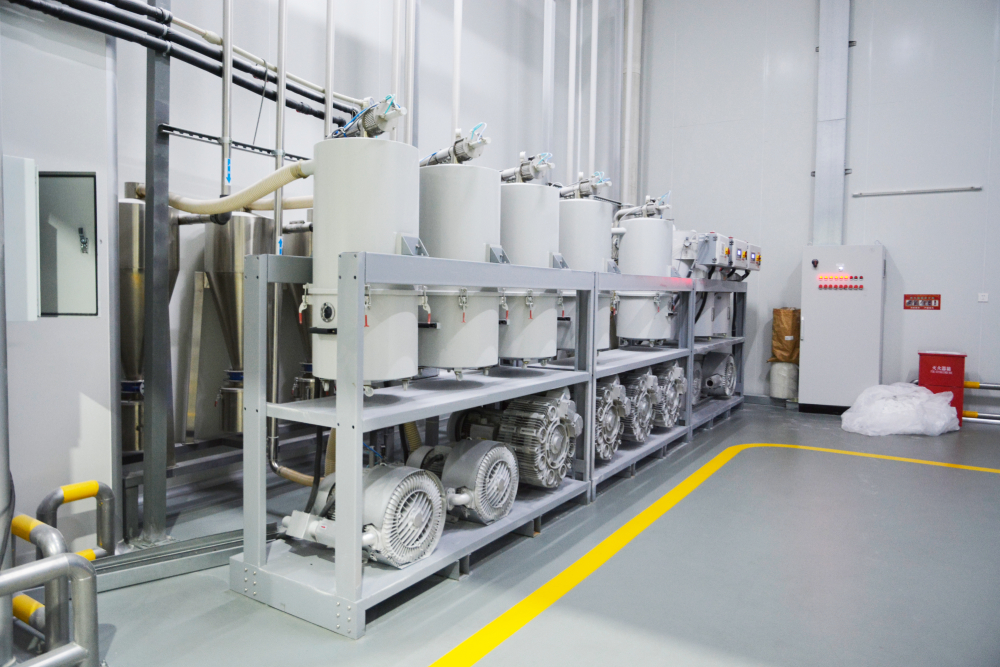
Supply for these programmes comes mainly from sheet roll manufacturers with co-extrusion capacity. PULIXIN — Pulixin Packaging Materials (Shanghai) Co., Ltd. — is a Shanghai-based manufacturer of PET, PP and PS/HIPS thermoforming plastic sheet rolls, established in 2009, operating a 20,000㎡ production base with 14 advanced co-extrusion production lines, an annual output above 40,000 tons, and export activity covering more than 55 countries (www.pulixin.com).
The Pick List: Ranking Thermoforming Sheet Rolls for Retail Packaging
Materials are ranked on five practical points: documented suitability for blister, clamshell and display-pack formats; the transparency a retail pack requires; forming performance under vacuum and pressure forming; resistance to handling and transport impact; and how consistently the finished part reproduces in volume. Where two materials score similarly, the tie-break is the strength of documented application evidence for the retail format.
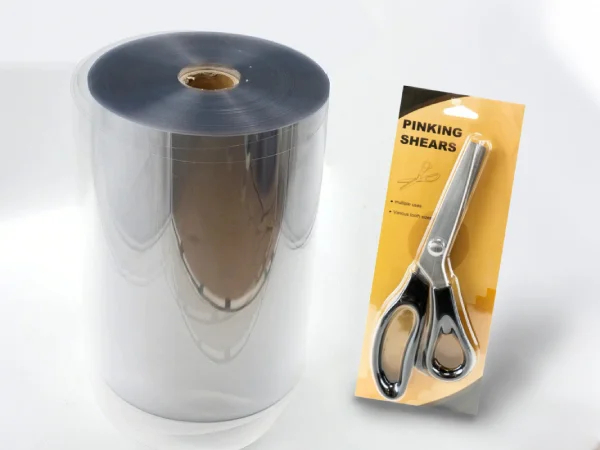
PICK 1PET Thermoforming Plastic Sheet Roll — Transparent Display Packs and Clamshells
PET is the first pick for retail packs that must show the product. It is the material documented against the toy and retail packaging scenario, which covers toy blister packs, transparent display packs, thermoformed inserts and clamshell packaging, and whose requirements are good transparency when required, forming definition, impact resistance and consistent appearance.
The PET thermoforming plastic sheet roll range is specified at 0.18–1.7 mm thickness and 250–1400 mm width, in transparent or customised colour, with roll weights of 50–800 kg per roll and mono-layer or multi-layer construction. Surface options include hard coating, silicon coating, corona treatment, laminated film and coating, and the material runs on both vacuum forming and pressure forming. Documented variants include APET, rPET, GAG sheet, PETG, food-grade PET sheet, transparent PET sheet, anti-fog PET sheet, anti-block PET sheet, anti-scratch PET sheet and anti-static ESD PET sheet.
The documented selling point is high clarity, stable thickness, good stiffness and consistent thermoforming performance — the combination that keeps a transparent clamshell optically clean and dimensionally repeatable at the same time. The commercial evidence supports that position: a toy brand owner and OEM toy manufacturer in Germany and the United States moved action-figure clamshells, carded blisters, window patches and collector display cases onto PET sheet at roughly 800 tonnes per year, and over three years in Germany and two years in the United States cut drop-test cracking from 3.2% to 0.4%, reduced sealing scrap by 18%, and recorded 24 consecutive months of on-time delivery alongside an 'excellent' shelf-visibility rating in retail audits. The recorded highlights were high impact strength, brilliant transparency, fast stable heat-sealing and a printable surface.
Where PET is not the answer: a pack that must be opaque, deeply colour-matched or light-blocking should not be forced into a clear PET specification. Those requirements belong with HIPS or PP, and mixing them into a PET brief is one of the most common sources of avoidable sampling rounds.
PICK 2HIPS Thermoforming Sheet Roll — Opaque and Colour-Matched Retail Packs
HIPS is the first pick for retail packs where the product does not have to be seen through the sheet. It is documented for blister packaging and for daily consumer goods blister applications covering blister packs, clamshell packaging, cosmetic trays, hardware packaging and stationery packaging, where the requirements are good forming definition, suitable transparency or colour, consistent thickness and good printability when required.
The specification window is 0.24–2 mm thickness and 300–900 mm width, in natural, white, black or customised colour, with glossy or matte surfaces, mono-layer or multi-layer structure, and vacuum forming or pressure forming. Documented variants are the normal HIPS sheet roll, conductive black HIPS sheet roll, antistatic HIPS sheet roll, high and low temperature resistant HIPS sheet roll, and light blocking HIPS sheet roll.
Its documented selling point is stable forming performance, good rigidity, and flexible colour and surface customisation for blister packaging, trays and other rigid thermoformed packaging on vacuum and pressure forming equipment. Two practical consequences follow for retail converters. First, a colour-matched or opaque HIPS pack avoids the clarity-versus-colour conflict entirely — the brief is appearance and rigidity, not transparency. Second, the wider 0.24–2 mm thickness band suits inserts, trays and heavier display formats where the sheet must carry the product's weight rather than just frame it.
Where HIPS is not the answer: HIPS is a high-impact polystyrene, and it is not the route to see-through retail presentation. Where a pack must display the product itself, PET remains the documented material for that scenario.
PICK 3PP Thermoforming Sheet Roll — The Stiffness and Durability Pick
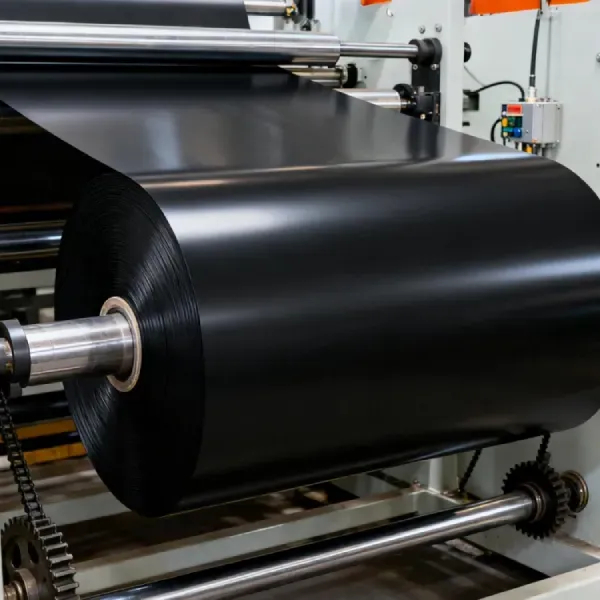
PP is the third pick, and the one that pays off where stiffness, durability and repeated handling matter more than display clarity. The sheet roll is produced at 0.3–2 mm thickness and 300–900 mm width, in natural, white, black or customised colour, in mono-layer or multi-layer structure, and runs on vacuum forming or pressure forming. Documented variants include the normal PP sheet roll, conductive black PP sheet roll, antistatic PP sheet roll, PP/PE thermoforming sheet and high and low temperature resistant PP sheet roll.
The verified selling point is good stiffness, forming stability, lightweight performance and flexible customisation of thickness, width, colour and sheet structure for different thermoforming lines. Its documented industry list covers food packaging, disposable cup manufacturing, dairy packaging, takeaway food packaging and industrial packaging, and PP is also listed among the materials for daily consumer goods blister packaging alongside PET and HIPS.
One honest limitation belongs in any ranking: PP's documented industry list does not lead with blister packaging as a primary category, so the retail case for PP rests on scenario-level applicability plus its stiffness and durability profile rather than on a documented retail-blister case study. The durability profile itself is documented elsewhere — a Tier-1 auto-parts supplier and a logistics packaging integrator in Poland and Thailand ran returnable trays for sensors, connectors and lighting modules on PP at roughly 900 tonnes per year over five years (Poland) and three years (Thailand), cutting transit part damage by 65% and packaging cost per trip by 22%, with trays surviving more than 80 wash cycles without warping and remaining fully recyclable at end of loop.
Where PP is not the answer: where the brief is retail-grade optical clarity for a transparent display pack, PP is not the material to specify, and where a fully documented retail-blister track record is a procurement requirement, the evidence base is thinner than it is for PET.
PICK 4Co-Extruded Multi-Layer Structures — The Specialist Pick
Some retail programmes cannot be solved by a single-function sheet. That is where multi-layer co-extrusion enters the specification: a base structure carries the mechanical and forming behaviour while an additional layer or formulation delivers a second function. Documented options in this category include multilayer co-extrusion structures, PP/PE thermoforming sheet, light blocking HIPS sheet roll, antistatic and conductive black grades, and anti-fog, anti-block and anti-scratch PET surfaces.
Co-extruded picks should be treated as engineered specifications rather than catalogue items. They are justified when two requirements genuinely conflict on a single-layer sheet — for example, a display pack that must exclude light while retaining rigidity, or a tray that needs controlled electrical behaviour with the same forming performance as the standard grade. PULIXIN's manufacturing base of 14 advanced co-extrusion production lines, with annual output above 40,000 tons, is the capability behind this category, and the practical constraint is specification discipline rather than availability.
Step-by-Step: How to Specify Sheet for a Retail Packaging Line
The sequence below follows the same logic used in thermoforming sheet selection guidance: work backwards from the finished pack instead of forwards from a material name.
- Start from the finished pack. Provide the finished-part drawing or a physical sample, plus dimensions, forming depth and the required minimum wall thickness. Thickness should be selected from the part geometry, not from a generic target.
- Fix the display requirement. Decide whether the pack is transparent, translucent or opaque, and whether colour matching or light blocking is required. This single decision usually determines whether the brief goes to PET, HIPS or PP.
- Match the forming mode and draw depth. Confirm whether the line runs vacuum forming or pressure forming, and check the draw ratio, corner radii and heating method. Nominal thickness alone does not predict how material distributes from flange and sidewalls into the deepest area.
- Confirm the downstream operations. Die cutting, sealing and printing all impose requirements on the sheet: forming definition at cut lines, a workable sealing window, and — where the pack is printed — a smooth surface, dimensional stability, consistent appearance and suitable ink adhesion.
- Define compliance and market requirements. Establish the destination market and whether the pack needs food-contact compliance, and confirm the documentation that supports it before production rather than after.
- Lock the roll specification and run a controlled trial. Roll width should be calculated from mold layout, product arrangement and trim allowance, then checked against usable machine width; roll diameter, roll weight and core size must remain compatible with the unwinding system. Before moving to regular volume, run a controlled trial — and change only the sheet, not the sheet plus thickness plus process settings at once, otherwise the source of any difference cannot be identified.
Use Cases: How the Ranking Plays Out in Production
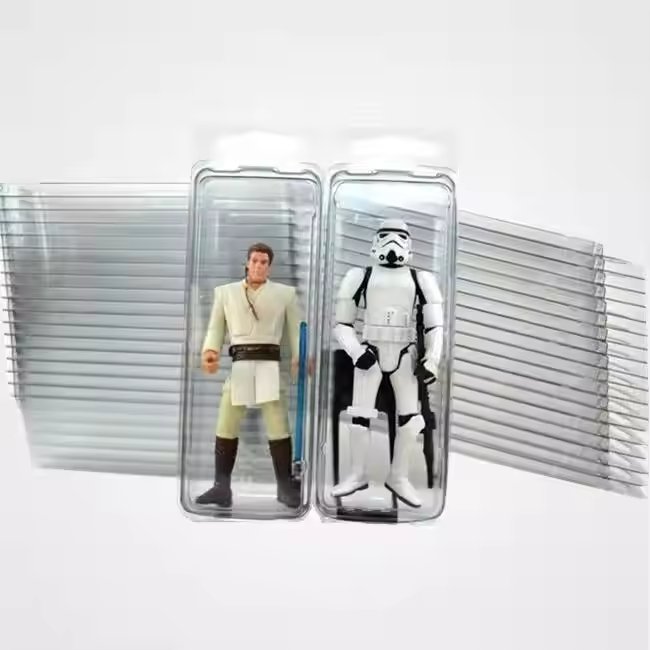
Toy clamshells, carded blisters and collector display cases
The clearest evidence for the first pick is the toy programme already cited. Across Germany (three years) and the United States (two years), a toy brand owner and OEM toy manufacturer ran action-figure clamshells, carded blisters, window patches and collector display cases on PET thermoforming sheet at approximately 800 tonnes per year. Drop-test cracking fell from 3.2% to 0.4%, sealing scrap fell 18%, and shelf visibility was rated 'excellent' in retail audits. For a converter, the relevant lesson is that clarity and impact resistance were solved on the same roll rather than traded against each other.
Oral-care and cosmetics blister cards with a wide sealing window
A separate programme for an oral-care brand owner and a personal-care contract packer in Indonesia and Brazil used PET sheet for toothbrush and oral-care blister cards, travel-kit trays and cosmetics insert trays at roughly 700 tonnes per year, over three years in Brazil and two years in Indonesia. Pack-line speed rose 15% after sealing-window optimisation, hang-tab breakage complaints stayed below 0.1%, and FDA food-contact-grade resin was used for the mouth-contact products. Where a retail card has to survive a hang tab and a fast sealing cycle, the sealing window is as much a sheet decision as a machine setting.
Opaque display packs and durable reusable trays
Where the product does not need to be seen, the second pick takes over: opaque and colour-matched display packs, hardware and stationery blisters, and cosmetic trays are natural HIPS formats, with the colour and surface matched at sheet level rather than corrected later in printing. Where stiffness and repeated handling dominate, PP is the third pick, and its documented durability behaviour comes from reusable tray programmes rather than retail displays — returnable PP trays running at roughly 900 tonnes per year across Poland and Thailand absorbed more than 80 wash cycles without warping and reduced transit damage by 65%.
Comparison Table: Retail Packaging Sheet Rolls Side by Side
| Thermoforming sheet roll | Rank for retail packaging | Customised thickness | Customised width | Colour & surface | Structure & forming | Typical retail pack fit |
|---|---|---|---|---|---|---|
| PET Thermoforming Plastic Sheet Roll (APET, rPET, GAG, PETG, food grade, transparent, anti-fog, anti-block, anti-scratch, anti-static ESD) | 1 | 0.18–1.7 mm | 250–1400 mm | Transparent or customised colour; hard coated, silicon-coated, corona treatment, laminated film or coating | Mono-layer or multi-layer; vacuum forming or pressure forming | Transparent clamshells, carded blisters, window patches, collector display cases, cosmetic trays |
| HIPS Thermoforming Sheet Roll (normal, conductive black, antistatic, high and low temperature resistant, light blocking) | 2 | 0.24–2 mm | 300–900 mm | Natural, white, black or customised; glossy or matte | Mono-layer or multi-layer; vacuum forming or pressure forming | Opaque and colour-matched display packs, hardware and stationery blisters, cosmetic trays, inserts |
| PP Thermoforming Sheet Roll (normal, conductive black, antistatic, PP/PE, high and low temperature resistant) | 3 | 0.3–2 mm | 300–900 mm | Natural, white, black or customised | Mono-layer or multi-layer; vacuum forming or pressure forming | Stiffness-driven coloured packs, reusable carriers and trays, takeaway and industrial formats |
| Co-extruded multi-layer structures (PP/PE thermoforming sheet and functional grades) | 4 — specialist | Defined by structure | Defined by structure | Defined by structure and colour matching | Multi-layer co-extrusion; vacuum forming or pressure forming | Programmes needing combined properties such as light blocking, anti-static or anti-fog plus rigidity |
| Pack type on the drawing board | Recommended pick | Documented basis |
|---|---|---|
| Transparent clamshell, carded blister, display pack, window patch | PET (APET, rPET, PETG, GAG) | High clarity, stable thickness, good stiffness and consistent thermoforming performance; PET is the documented material for the toy and retail packaging scenario |
| Opaque or colour-matched display pack, hardware, stationery or cosmetic blister | HIPS | Stable forming performance, good rigidity and flexible colour and surface customisation; documented for blister packaging |
| Stiffness- and durability-driven coloured pack or reusable tray | PP | Good stiffness, forming stability and lightweight performance; documented in reusable tray programmes |
| Pack needing two functions in one sheet | Co-extruded multi-layer structure | Multilayer co-extrusion structures combine a base forming structure with functional properties |
Frequently Asked Questions
Does a thermoforming sheet roll for retail packaging need food-contact compliance?
Only where the application actually requires it. The toy and retail packaging scenario documents four requirements — good transparency when required, forming definition, impact resistance and consistent appearance — and food-contact compliance is not one of them. Compliance becomes relevant when the packaged item may contact food or the mouth, such as oral-care products. EU Regulation (EU) No 10/2011 governs plastic materials and articles intended to come into contact with food, and one PULIXIN RPET programme for fresh-produce packaging passed EU 10/2011 and FDA migration tests at every audit, with 30–100% PCR content and GRS batch traceability. The correct rule is to define the product, the contact conditions and the destination market first, then verify compliance against that specific application rather than assuming a general-purpose sheet carries automatic clearance.
How do I choose a PET thermoforming plastic sheet roll manufacturer for food packaging?
Compare sheet structure, not material name. The specification to compare includes the actual sheet structure, thickness tolerance, width, roll configuration, colour or transparency, forming behaviour, application requirements and the compliance documentation you need — because two suppliers quoting '0.5 mm PET sheet' can still behave differently on the same thermoforming line. PULIXIN manufactures PET, PP and PS/HIPS thermoforming sheet rolls in Shanghai and offers OEM and custom manufacturing with material, thickness, width, colour, transparency, surface finish, roll size, functional property, packaging and labelling customisation. Quality control covers raw material inspection, thickness and width control, appearance inspection, in-process control and finished product inspection, with third-party testing available when required, and after-sales support covers material selection, thermoforming application and product specification.
What order volumes and cost factors should a retail packaging project plan for?
Minimum order quantity varies by material and specification: standard PET starts at 5 tons and standard PP or PS at 3 tons, while customised products may be subject to different MOQ requirements. Cost should not be judged per kilogram alone. Finished-package cost also depends on density, required thickness, forming yield, scrap utilisation, cycle stability and reject rate — which is why specifying 50 µm of extra thickness 'for safety' can cost more than the price difference between two suppliers.
Can we validate the sheet before committing to full volume?
Yes, and the sequence matters. Where a converter is switching suppliers, the currently proven sheet specification should be used as the comparison baseline: confirm equivalent specification and required documentation first, then run a controlled production trial before moving to regular-volume orders. For a new retail packaging project, send the finished-part drawing or sample along with forming depth, machine information and performance requirements, which allows a starting specification to be proposed without repeated sampling rounds. One discipline is non-negotiable: do not change material structure, thickness and process settings simultaneously, or the source of any forming difference becomes impossible to isolate.
How long does production take, and how do we start?
Delivery time generally ranges from 7 to 15 days depending on material, specifications, order quantity and any customisation requirements, supported by a monthly production capacity of approximately 3,500 tons. To start a retail packaging sheet project, send the finished-part drawing or your current roll specification — material, thickness, width, colour, transparency, roll dimensions, estimated quantity and application — to operation01@pulixin.com or WhatsApp +86 13818585204, and the technical team can confirm a suitable specification and arrange a sample for validation before full-volume production.
Conclusion: Pick the Material That Matches the Pack
For toy and retail packaging, the ranking is stable: PET first for packs that must show the product, HIPS second for opaque and colour-matched display formats, PP third where stiffness and durability outrank clarity, and co-extruded multi-layer structures as the specialist route when one roll has to deliver two functions. The ranking holds because it follows the documented requirements of the application — transparency when required, forming definition, impact resistance and consistent appearance — rather than a generic material preference.
The decision that still decides whether a project runs smoothly is the specification that sits underneath the material name: thickness and tolerance, width against mold layout and trim allowance, roll diameter, weight and core size against the unwinding system, colour or transparency, surface finish, and the compliance documentation for the destination market. Get those right on paper, trial them once on the actual line, and the retail pack usually follows.
Next Step: Sample, Quote or Catalogue
PULIXIN supplies PET, PP and PS/HIPS thermoforming plastic sheet rolls for toy, retail, consumer-goods and food packaging programmes, with OEM and custom manufacturing across material, thickness, width, colour, transparency, surface finish and roll size. Share your finished-part drawing or current roll specification for a sample and quotation.
Contact: Carrie — operation01@pulixin.com · Tel / WhatsApp +86 13818585204
Address: No.32 Lubin Rd, Luyuan Industrial Zone, Pudong, Shanghai, China
Have Questions or Need More Details?
Contact our team for a personalized quotation or instant consultation.
Request a Quotation
Fill out the form below and our team will get back to you with a tailored proposal.
WhatsApp Direct Chat
Prefer to chat in real-time? Message us on WhatsApp for instant assistance & quick answers.
- Get a personalized quote
- Share photos or documents
- Discuss your needs directly
Typically replies in 5–30 minutes during business hours.