
Top Plastic Sheet Rolls for Transparent Folding Boxes: Ranked for Retail
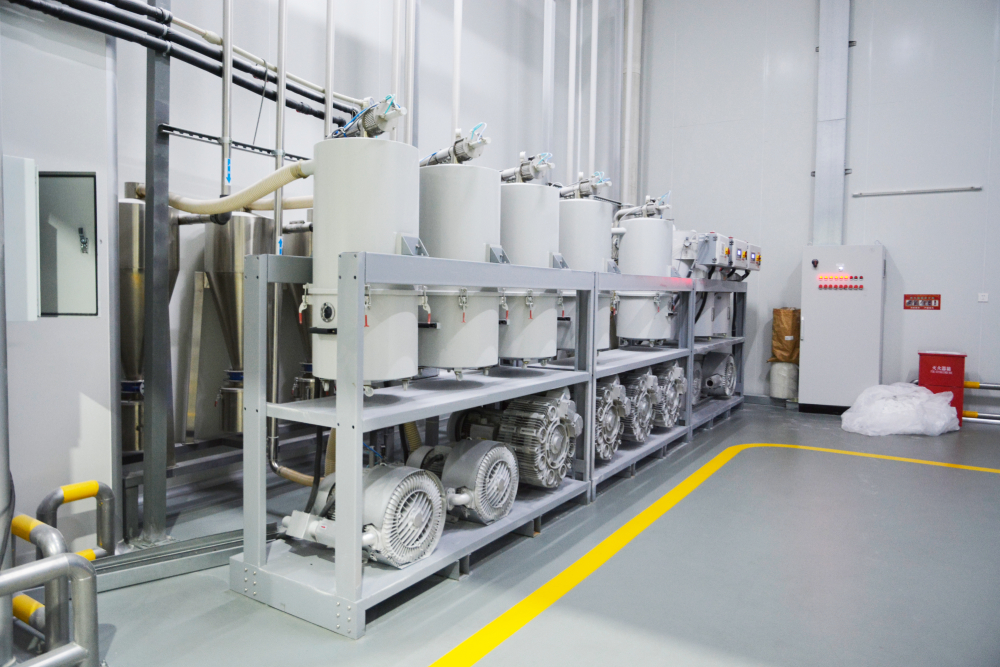
A transparent folding box is a converting job before it is a retail package. The sheet is printed, die-cut, creased and folded, so the material has to deliver shelf-level clarity, a print-ready surface, dimensional stability and a crease line that survives folding and assembly — season after season.
This article ranks thermoforming plastic sheet roll options for transparent folding boxes — cosmetic boxes, gift boxes and retail display boxes — by how well each one carries that converting chain. It compares material routes rather than brands, because the decisive differences sit in sheet structure, transparency, surface, thickness tolerance and repeatability, not in a logo.
The Problem: "Clear PET Sheet" Is Not a Folding Box Specification
Transparent folding box briefs usually reach the sheet supplier as three words and a number: clear PET, 0.5 mm. That is not enough to buy against, and three practical problems follow from it.
Clarity is treated as a single attribute. Clear sheet should not be selected by transparency alone. Buyers should consider the required clarity together with stiffness, forming depth, impact performance, temperature conditions, sealing or printing requirements and the finished package. Two sheets that both look clear on a sample rack can behave differently under a printing press, a die-cutter and a creaser.
Suppliers get compared by material name and price rather than by specification. A sheet described as "0.5 mm PET" by two suppliers may still behave differently on the same line, because sheet structure, thickness tolerance, width, roll configuration, colour or transparency and forming behaviour are not identical. In a retail box program, that difference surfaces as print misregistration, an inconsistent crease line, or a box that will not fold square.
The converting flow is ignored at the selection stage. Transparent folding box production follows the sequence of sheet printing, die cutting, creasing, folding and box assembly, using printing, die-cutting, creasing and folding equipment. The sheet properties that matter in that flow are high transparency, a smooth surface, good printability, dimensional stability and suitable folding performance. A material chosen only for clarity can pass a visual check and still fail at the creaser.
Industry Background: Retail Sheet Demand, Recycled Content and the Compliance Frame
Retail packaging demand continues to widen. The global thermoformed plastic market was valued at USD 14.79 billion in 2023, with a projected compound annual growth rate of 4.9% for 2024–2030, according to Grand View Research. Read that with one caution: market-size estimates for thermoformed plastics differ between research publishers partly because some measure raw sheet material while others measure finished thermoformed products. Treat published figures as a directional signal rather than a procurement number.
Two structural shifts are shaping sheet selection for folding boxes.
Recycled content has moved from preference to brief requirement. The recycled PET (rPET) market value is projected to grow to USD 24.6 billion by 2034, according to Dataintelo. Within sheet sourcing, rPET sheet incorporates recycled PET content and is aimed at customers seeking to increase recycled material use in packaging; the actual recycled percentage must be confirmed for each product or order rather than assumed.
Compliance has to be defined per project. Where a transparent folding box comes into contact with food — confectionery, bakery items, food gifts — EU Regulation (EU) No 10/2011 governs plastic materials and articles intended to come into contact with food in the European Union. Food-contact compliance cannot be assumed from the phrase "food grade"; it is verified against the specific material, test report, application and destination market.
For importers, one administrative detail is worth settling early: non-cellular plastic sheet is classified under HS Code heading 3920, and cellular plastic sheet under heading 3921. Correct classification at the sheet level prevents disputes further down the box supply chain.
The Ranked Shortlist: Sheet Rolls for Transparent Folding Boxes
PULIXIN — Pulixin Packaging Materials (Shanghai) Co., Ltd. — is a rigid plastic sheet manufacturer founded in 2009 in Shanghai, China, producing PET, PP and PS/HIPS thermoforming plastic sheet rolls and exporting to more than 55 countries. The ranking below is drawn from that product range and from the published specifications for each material family.
Ranked by fit for transparent folding box production:
- APET thermoforming plastic sheet roll — the default for a fully transparent printed box body.
- Co-extruded (multilayer) PET sheet roll — when the box needs a sealing or functional layer, not only clarity.
- rPET thermoforming sheet roll — when the packaging brief carries a recycled-content requirement.
- PP thermoforming sheet roll — for folded components where lower density or higher temperature exposure matters more than clarity.
- HIPS thermoforming sheet roll — the cost-effective route for opaque or coloured bases, sleeves and inserts.
RANK 1
APET Thermoforming Plastic Sheet Roll
Where a box is judged on the shelf by what shows through it, PET is the natural starting point. PET is generally preferred when high transparency is required, and PET sheet offers high transparency, good thermoforming performance and a PVC-free material option. In published application guidance, PET is listed as suitable for food trays, clear blister packaging, clamshells, folding boxes and retail packaging — folding boxes are an explicit fit.
APET specifically provides a practical balance of transparency, stiffness and cost for high-volume thermoformed packaging, and it is generally the more cost-oriented choice for conventional high-volume packaging. Where forming geometry becomes more demanding, PETG is often selected instead, because it can offer a more forgiving forming response for some geometries.
Within this family, PULIXIN supplies PET thermoforming plastic sheet roll at 0.18–1.7 mm thickness (customised), 250–1400 mm width (customised), transparent or customised colour, mono-layer or multi-layer structure, vacuum forming or pressure forming, and a customised roll size of 50–800 kg per roll. Surface treatment is specification-dependent and can include hard coating, silicon coating, corona treatment, laminated film or other coating. Where the sheet is also thermoformed — for a window, an insert or a shaped tray inside the box — PET thermoforming typically runs between 130°C and 160°C (266°F to 320°F).
Limits to plan for: PET density is approximately 1.33–1.40 g/cm³, so weight-sensitive programs should test alternatives rather than assume. PET also requires appropriate drying or material management and temperature control depending on the sheet type and process.
RANK 2
Co-Extruded (Multilayer) PET Sheet Roll
A folded printed box usually does not need more than a single material. A box that also has to seal, peel or carry a functional surface does.
Co-extrusion and lamination are the routes to that. PULIXIN manufactures multilayer co-extrusion structures as a customisation option, and in published material comparisons, mono PET is described as offering a simpler single-material structure, while a PET/PE laminated sheet combines PET rigidity with a PE sealing layer for applications requiring heat sealing — typically meat trays, fresh food trays and other thermoformed packaging with compatible heat-sealing performance requirements.
For retail boxes, the same logic applies wherever a transparent panel must be sealed to a board, lid or base, or wherever a project wants one roll to deliver two functions: rigidity from the PET layer and sealability from the PE layer.
The trade-off is control. A PET/PE structure requires control of both thermoforming behaviour and sealing compatibility, and because lamination adds a material layer and a process step, actual cost depends on layer structure, thickness and sealing requirements. There is no universal performance percentage for co-extruded versus mono structures — the result depends on layer structure, thickness and the conditions on your line.
RANK 3
rPET Thermoforming Sheet Roll
When a brand owner's packaging brief includes recycled content, rPET is the PET route rather than a separate material system. rPET sheet incorporates recycled PET content and targets customers seeking to increase recycled material use in packaging, with applications covering thermoformed packaging, trays and blister packaging where a recycled-content requirement exists.
Three practical points belong on the specification sheet before it is approved:
- Recycled content is customised, not fixed. The percentage can be set according to product specification and compliance requirements, and the actual percentage must be confirmed for each product or order.
- It is not automatically cheaper. Cost depends on recycled-content ratio, material quality, certification requirements and market conditions — rPET is not necessarily cheaper than virgin PET.
- Processing may need adjustment. Conditions may need to change according to recycled content, intrinsic viscosity, sheet structure and thermoforming requirements, so a new rPET specification deserves its own trial rather than a copy of the virgin PET settings.
RANK 4
PP Thermoforming Plastic Sheet Roll
PP sits fourth for transparent folding boxes — not because it is a weaker material, but because clarity is not its job.
Compared with PET, PP offers lower density and better suitability for applications requiring higher temperature resistance, while PET generally offers higher transparency and stiffness. Typical material density is approximately 0.90–0.91 g/cm³ for PP against approximately 1.33–1.40 g/cm³ for PET, which is why PP's lower density can be advantageous in weight-sensitive applications.
Inside a retail box program, PP becomes relevant in three situations: a folded component exposed to higher temperatures; a structure such as a PP/PE thermoforming sheet where a sealing layer is required; and projects where a natural, white or black finish is acceptable and a per-kilogram weight advantage matters. PULIXIN also offers food-grade PP sheet rolls specifically optimised for frozen food trays with impact-resistant copolymer options.
The PP specification range covers 0.3–2 mm thickness (customised), 300–900 mm width (customised), natural, white, black or customised colour, mono-layer or multi-layer structure, and vacuum forming or pressure forming. Grade options include normal PP sheet roll, conductive black PP sheet roll, antistatic PP sheet roll, PP/PE thermoforming sheet and high and low temperature resistant PP sheet roll.
PP typically requires different heating and forming settings from PET and demands good temperature control during thermoforming, so moving a folding box component from PET to PP is a process change, not a like-for-like swap.
RANK 5
HIPS Thermoforming Plastic Sheet Roll
Most transparent folding boxes are not transparent all the way through. The base, sleeve, divider or insert is often opaque, coloured or printed — and that is where HIPS is usually the cost-effective answer rather than a compromise.
HIPS provides better impact resistance and toughness than GPPS, while GPPS is generally more rigid and transparent but more brittle. HIPS itself offers good impact resistance, easy thermoforming and flexible colour options; where high transparency is required, PET remains the preferred material. Published application guidance places HIPS in opaque trays, electronics packaging, consumer-product trays and coloured blister inserts.
The specification range from PULIXIN covers 0.24–2 mm thickness (customised), 300–900 mm width (customised), natural, white, black or customised colour, glossy or matte surface, mono-layer or multi-layer structure, and vacuum forming or pressure forming. Grades include normal HIPS sheet roll, conductive black HIPS sheet roll, antistatic HIPS sheet roll, high and low temperature resistant HIPS sheet roll and light blocking HIPS sheet roll.
One honest caveat on cost: actual material cost depends on resin grade, impact-modifier requirements, thickness, colour and market conditions, and no universal percentage applies to impact or stiffness differences. HIPS is often the lower-cost route for non-clear components, but the comparison should be made specification by specification, not by assumption.
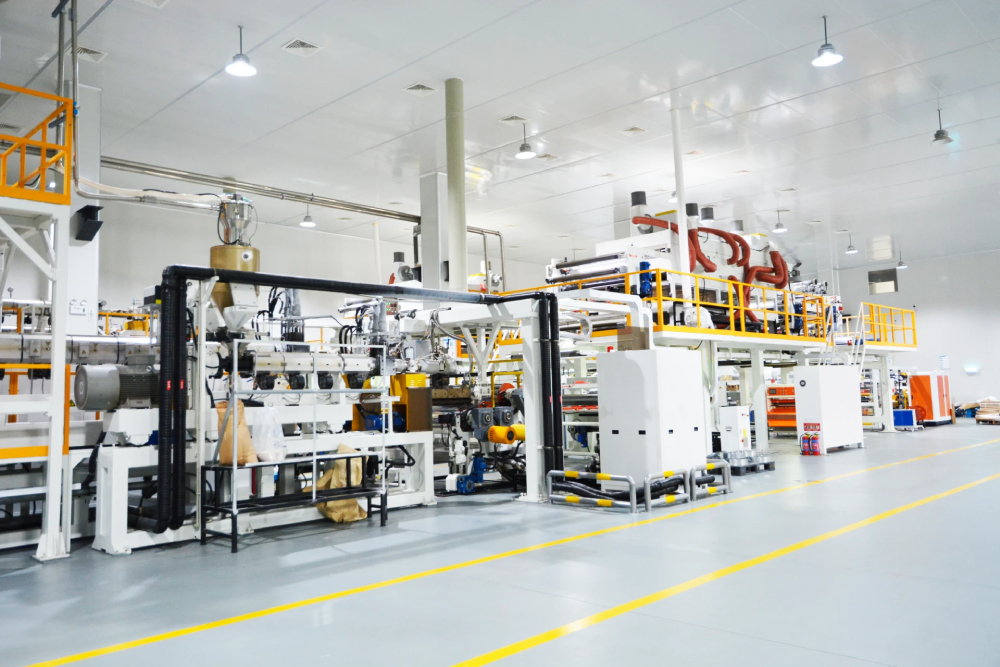
Step-by-Step: Specifying a Folding Box Sheet from the Finished Box Backwards
Six steps, in the order that avoids re-work.
- Start from the finished box, not from a familiar sheet. For a new thermoforming project, the sheet should be selected from the finished part backwards: application, material requirements, part dimensions, forming depth, required rigidity, transparency or colour, operating temperature and thermoforming equipment. A drawing or a finished sample is especially useful for this.
- Assign a material to each element of the box. Transparent printed body or window: APET. A sealed or functional layer: co-extruded or laminated PET structure. A recycled-content target: rPET, with the percentage confirmed per order. Opaque or coloured base, sleeve or insert: HIPS. A folded component driven by weight or temperature: PP, including PP/PE structures where sealing applies.
- Set thickness and width from the box geometry. Thickness depends on material, forming depth, part dimensions, stiffness and final thickness distribution. Roll width should consider mold layout, product arrangement, edge trim and the usable width of the machine. Providing only a target thickness without product and machine information can lead to unnecessary material use or poor forming performance.
- Confirm the roll format against the unwinding equipment. Roll width is normally determined by mold layout, product arrangement and trim allowance, while roll diameter, roll weight and core size must remain compatible with the unwinding system. Correct roll specifications reduce unnecessary trim waste and prevent handling or feeding problems. For PET, roll size can be customised between 50 and 800 kg per roll.
- Match the surface to the printing process. Transparent folding box production begins with sheet printing, so surface and ink adhesion matter as much as clarity. Printing and display applications require a smooth surface, dimensional stability, consistent appearance and suitable ink adhesion according to the printing process. Surface treatment options such as corona treatment, hard coating, silicon coating or laminated film should be specified against the intended print method and confirmed on the converter's own press.
- Validate the crease and fold, then lock the baseline. Crease and fold behaviour is confirmed by trial on the actual die and folder. During validation, do not change material structure, thickness and process settings at the same time, because the source of any forming difference then becomes difficult to identify. Once the trial passes, freeze the specification — structure, thickness and tolerance, width, roll configuration, colour or transparency, surface treatment and required documentation — as the repeat-order baseline.
Use Cases: Which Rank Fits Which Box
- Cosmetic folding boxes. Rank 1 APET. High transparency and stiffness make the product the focal point, and the smooth surface supports the print and finishing work cosmetic packaging usually carries. Where the box is handled frequently on a display counter, an anti-scratch surface treatment can be specified and the appearance standard confirmed before mass production.
- Gift boxes. Rank 1 APET, or Rank 3 rPET where the brand brief sets a recycled-content target. Where the box includes a sealed window or a sealed inner element, Rank 2 co-extruded PET/PE structures should be evaluated instead of mono PET, because the PE layer is what enables heat sealing.
- Retail display boxes for consumer goods, hardware and stationery. A two-material build is common: Rank 1 APET for the transparent body or window and Rank 5 HIPS for the base, sleeve or inserts, where colour flexibility and impact resistance matter more than clarity.
- Confectionery and food-gift boxes. If the box contacts food, settle the compliance question before the artwork: confirm the specific material, test report, application and destination-market requirements — EU Regulation (EU) No 10/2011 where the EU market applies — rather than relying on a general "food grade" description.
- Components with an electrical or static-control requirement. Anti-static and conductive grades exist in both the PP and HIPS ranges, but they are not default choices: not every electronics package requires anti-static material, and the requirement depends on component sensitivity and the customer's electrostatic-control system. Specify the required electrical property range, dimensions, forming depth, material preference and colour before production.
Comparison Table: Ranked Sheet Options at a Glance
The table compares the sheet routes ranked above on the attributes that decide a transparent folding box: clarity, printable surface, specification range and role in the box.
| Rank | Material / typical grade | Appearance & clarity | Thickness (customised) | Width (customised) | Colour / surface | Forming route | Best-fit role in a transparent folding box |
|---|---|---|---|---|---|---|---|
| 1 | PET / APET (PETG where forming geometry is more demanding) | High transparency and stiffness; PVC-free option | 0.18–1.7 mm | 250–1400 mm | Transparent or customised; surface treatment depends (hard coat, silicon coat, corona treatment, laminated film, coating) | Vacuum forming / pressure forming | Printed folded box body, clear window, transparent display sleeve |
| 2 | Co-extruded / multilayer PET (for example a PET/PE structure) | Depends on layer structure; the added PE layer changes surface and sealing behaviour | Customised by structure | Customised by structure | Customised; may include a sealing or functional layer | Vacuum forming / pressure forming | Boxes requiring a heat-sealing or functional layer, not only clarity |
| 3 | rPET (recycled PET content) | PET-family appearance; recycled percentage confirmed per order | 0.18–1.7 mm (PET family) | 250–1400 mm | Transparent or customised | Vacuum forming / pressure forming | Retail box programs with a recycled-content requirement |
| 4 | PP (normal, PP/PE, antistatic, conductive black, high and low temperature resistant) | Natural, white, black or customised; not positioned as a clarity material | 0.3–2 mm | 300–900 mm | Natural / white / black / customised | Vacuum forming / pressure forming | Folded components where density or temperature exposure matters more than clarity |
| 5 | HIPS (normal, antistatic, conductive black, light blocking, high and low temperature resistant) | Opaque or coloured; glossy or matte | 0.24–2 mm | 300–900 mm | Natural / white / black / customised; glossy or matte | Vacuum forming / pressure forming | Cost-effective bases, sleeves, dividers and inserts |
FAQ
What compliance points should be confirmed before a transparent folding box program starts?
Confirm the material and the destination market first. Where the box comes into contact with food, EU Regulation (EU) No 10/2011 governs plastic materials and articles intended to come into contact with food in the European Union, and food-contact compliance should be verified against the specific material, test report, application and destination market. A general description such as "food grade" does not by itself define a usable thermoforming specification — the food type, package conditions, storage temperature and applicable food-contact requirements should all be stated. For import documentation, non-cellular plastic sheet is classified under HS Code heading 3920 and cellular plastic sheet under 3921.
Can one clear sheet be both highly transparent and stable enough for printing, creasing and folding?
Transparency alone is not a selection criterion. Clear sheet should be assessed by the required clarity together with stiffness, forming depth, impact performance, temperature conditions, sealing or printing requirements and the finished package. Transparent folding box production runs through sheet printing, die cutting, creasing and folding, so high transparency, a smooth surface, good printability, dimensional stability and suitable folding performance must all be satisfied at the same time. Surface treatment is the usual lever — hard coating, silicon coating, corona treatment or laminated film are available depending on the specification — and ink adhesion should be confirmed on the converter's own press, because suitability depends on the printing process used. Where forming geometry becomes more demanding, PETG can offer a more forgiving forming response than APET.
Why is the cheapest sheet per kilogram usually not the cheapest folding box?
Because finished-package cost depends on more than price per kilogram: density, required thickness, forming yield, scrap utilisation, cycle stability and reject rate all contribute. PP's lower density — approximately 0.90–0.91 g/cm³ against approximately 1.33–1.40 g/cm³ for PET — can be an advantage in weight-sensitive applications, but material behaviour and downstream performance have to be weighed against it. Recycled content is not automatically a saving either: rPET cost depends on recycled-content ratio, material quality, certification requirements and market conditions, and rPET is not necessarily cheaper than virgin PET. HIPS cost depends on resin grade, impact-modifier requirements, thickness, colour and market conditions. Compare delivered specifications for the same box, not prices per kilogram.
How should a sample be validated for a new transparent folding box?
Work from the finished part backwards. Provide the box drawing or a finished sample together with the application, material preference, dimensions, forming depth, required rigidity, transparency or colour, operating temperature and machine information — for new or difficult projects, a drawing or sample helps the manufacturer understand forming depth, geometry and performance requirements. Then run a controlled trial on your own press, die-cutter and creaser. Change one variable at a time: adjusting material structure, thickness and process settings simultaneously makes the source of any difference impossible to identify. A passed trial should end with a frozen specification, so the sample that worked is the specification you can re-order.
How do we keep a multi-season folding box program supplied to the same specification?
Qualify suppliers by equivalence, not by material name. Before switching, compare the actual sheet structure, thickness tolerance, width, roll configuration, colour or transparency, forming behaviour and application requirements — a specification described as "0.5 mm PET" by two suppliers may still behave differently on the same line. Then lock the baseline specification and its documentation for repeat orders, so artwork changes and seasonal volumes do not trigger a fresh material qualification. MOQ depends on material, thickness, width, colour and customisation requirements and should be confirmed for each specification; delivery is quoted EXW, FOB or CIF; and pre-shipment acceptance covers specification verification, thickness and width inspection, appearance inspection and finished-product quality inspection, with third-party inspection available on request. PULIXIN manufactures PET, PP and PS/HIPS thermoforming plastic sheet rolls on 14 co-extrusion production lines, with an annual output above 40,000 tons and exports to more than 55 countries. To start a program, send the box drawing and your current sheet specification to operation01@pulixin.com or WhatsApp +86 13818585204, or download the PULIXIN catalogue at PULIXIN DESU NEW Catalogue.
Conclusion: Rank the Sheet Against the Box, Then Lock the Supply
The shortlist for transparent folding boxes is straightforward once the box is treated as a converting job. APET leads for a fully transparent printed body, because transparency, stiffness and printability are the properties the shelf rewards. A co-extruded or laminated PET structure takes second place where the box must seal or carry a functional layer. rPET covers recycled-content briefs, subject to a per-order percentage confirmation. PP serves folded components where lower density or higher temperature exposure outweighs the need for clarity. HIPS covers the opaque and coloured base, sleeve and insert work at a cost structure that does not depend on clarity.
The ranking is only half of the decision. The other half is repeatability. Retail box programs run across seasons, artwork revisions and repeat purchase orders, and each of those changes touches a material that was previously approved. Sheet specification — structure, thickness and tolerance, width, roll configuration, colour or transparency, surface treatment and documentation — is what protects a program from re-qualification every season, and it is the reason a sheet supplier should be assessed on specification equivalence and supply continuity rather than on a one-off price.
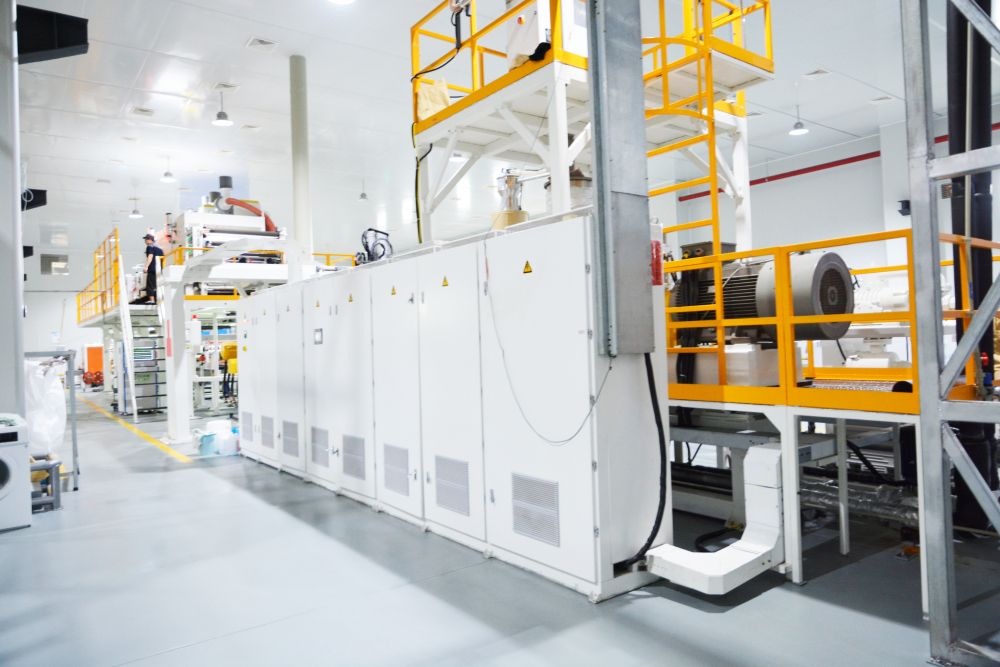
Next step: send the box, not just the material name. Share your folding box drawing, current sheet specification and target market, and PULIXIN will recommend a starting sheet structure for your press, die-cutter and creaser.
Email: operation01@pulixin.com | Tel / WhatsApp: +86 13818585204 | Contact: Carrie
Address: No.32 Lubin Rd, Luyuan Industrial Zone, Pudong, Shanghai, China | Website: www.pulixin.com
Download the PULIXIN catalogue (PDF) | Start a WhatsApp enquiry
Have Questions or Need More Details?
Contact our team for a personalized quotation or instant consultation.
Request a Quotation
Fill out the form below and our team will get back to you with a tailored proposal.
WhatsApp Direct Chat
Prefer to chat in real-time? Message us on WhatsApp for instant assistance & quick answers.
- Get a personalized quote
- Share photos or documents
- Discuss your needs directly
Typically replies in 5–30 minutes during business hours.