
Long-Term Thermoforming Sheet Roll Partnerships: FAQ on Orders, Specs and After-Sales Support
Answer first: a long-term thermoforming plastic sheet roll partnership holds when three things stay fixed across orders instead of being renegotiated each time — a written purchasing and acceptance protocol, a roll specification written at the level the supplier actually controls, and after-sales and storage conditions that keep forming performance repeatable. Buyers who change suppliers usually lose stability in one of those three areas, not in the material name.
This FAQ is written for buyers who are past the trial stage and are now deciding how to run sheet roll supply over multiple years: what to put in the order, what to re-check when the supplier changes, how to specify roll width, roll diameter and core against the existing unwinding system, and what after-sales support should actually cover.
PULIXIN Thermoforming Plastic Sheet is the rigid sheet roll range produced by Pulixin Packaging Materials (Shanghai) Co., Ltd., a Shanghai-based manufacturer established in 2009 that produces PET, PP and HIPS sheet rolls for thermoforming and exports to more than 55 countries.
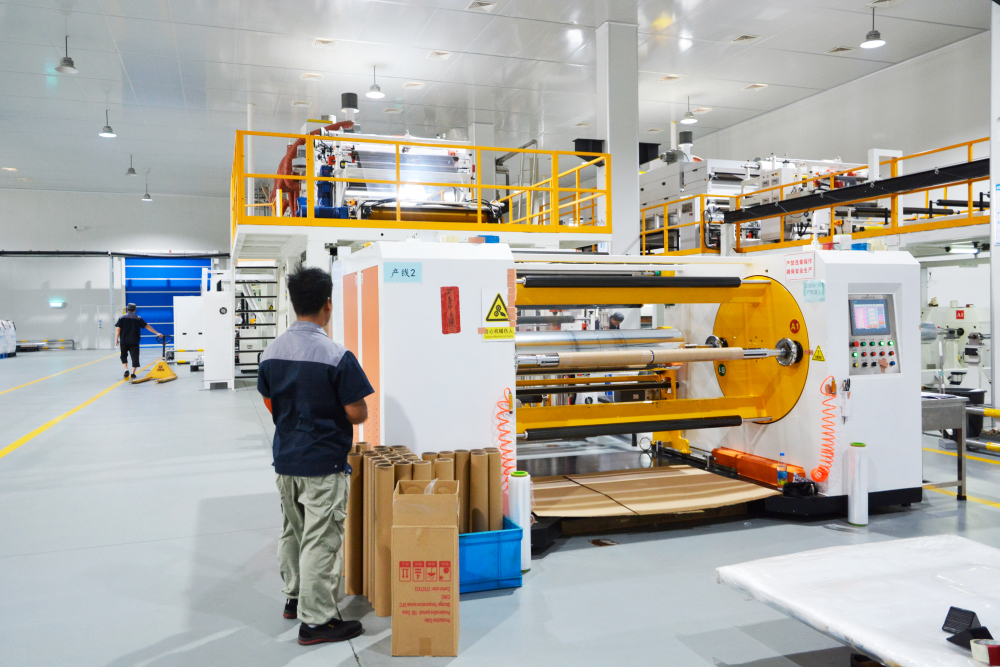
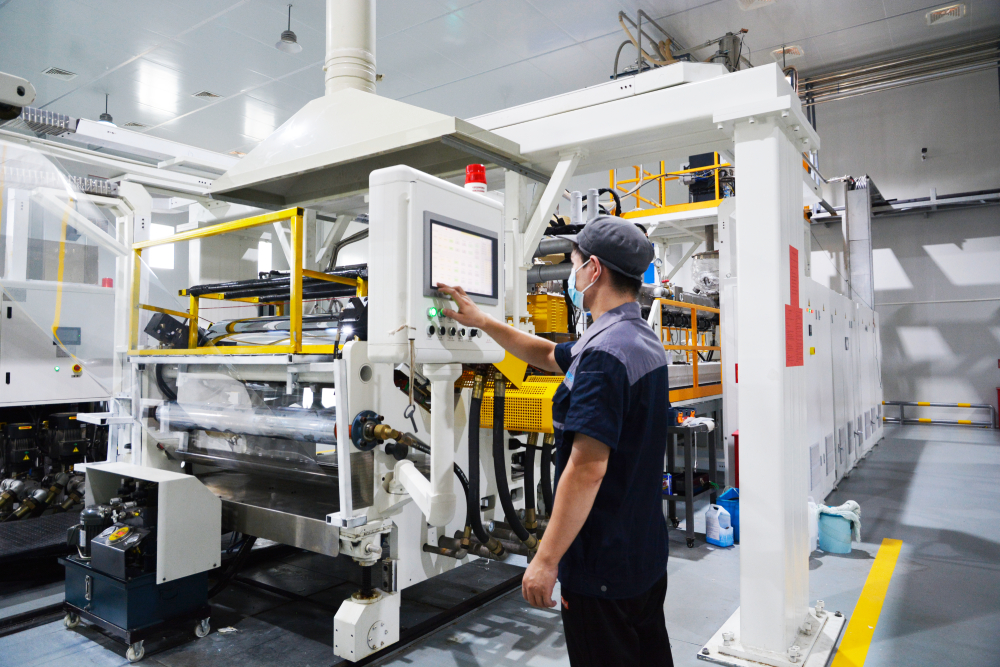
Cover: PULIXIN production base in Shanghai, where PET, PP and HIPS sheet rolls are manufactured for multi-year supply programs.
What this page answers, in order
Order and acceptance terms → specification baseline when changing suppliers → roll width, diameter and core → downstream equipment compatibility → controlled qualification trial → storage and after-sales conditions → material comparison → FAQ on compliance, capability, budget, sampling and continuity.
Problem Definition: Why a One-Off Sheet Roll Order Rarely Survives Year Two
A single order can be judged on delivered weight and price per kilogram. A multi-year supply cannot, because the variables that define performance are not the variables that appear on a purchase order.
Problem 1 — the specification is re-quoted under the same name. Two suppliers can both describe a product as 0.5 mm PET sheet, and those two rolls can still behave differently on the same thermoforming line. Material structure, thickness tolerance, width, roll configuration, colour or transparency, forming behaviour and application requirements are separate items and must be compared separately.
Problem 2 — the roll configuration drifts. Roll width is normally determined by mould layout, product arrangement and trim allowance, while roll diameter, roll weight and core size must stay compatible with the unwinding system. A roll that is correct in material terms but wrong in diameter, weight or core can still create feeding problems and unnecessary trim waste.
Problem 3 — storage and handling change silently. Sheet curl before forming can originate from material structure, residual stress, winding, storage conditions, temperature change, moisture or handling. If the cause is assumed to be the material, a buyer may switch suppliers to solve a problem that was created in the warehouse.
A fourth failure mode belongs to documentation rather than physics: the compliance file that supported the first shipment is never reconciled with the grade, structure or destination market used in year two.
Industry Background: Why Sheet Roll Supply Is Being Contracted for Longer Periods
Thermoformed packaging is a large, growing material category, and growth of that kind changes how buyers contract. Grand View Research valued the global thermoformed plastic market at USD 14.79 billion in 2023 and projects a compound annual growth rate of 4.9% for 2024–2030. As volume grows, more sheet suppliers enter the market, which makes supplier qualification and specification discipline more important rather than less.
Sustainability requirements are moving on a similar timeline. Dataintelo projects the recycled PET market to reach USD 24.6 billion by 2034, which is one reason recycled-content questions now appear in multi-year supply discussions rather than only in single trials. Recycled content can be customised according to product specification and compliance requirements, but the actual percentage has to be confirmed for each product and order — and rPET is not automatically cheaper than virgin PET.
Regulation shapes the paperwork. In the European Union, plastic materials and articles intended to come into contact with food are governed by Regulation (EU) No 10/2011, so a roll destined for that market must be assessed against that framework together with the buyer's own specification. On the logistics side, thermoforming plastic materials are classified under HS Code Heading 3920 for non-cellular products and 3921 for cellular products, which is useful when a multi-year contract spans several destination markets.
Add the practical reality of long tool life: a mould qualified against one sheet specification will be fed by that specification for years. Material changes may require machine setting changes and sometimes tooling adjustment, because different materials have different shrinkage, heating and forming behaviour. That single fact is why buyers increasingly treat sheet supply as a partnership rather than a repeating spot purchase.
Detailed Solution: What a Multi-Year Sheet Roll Partner Must Hold Constant
Long-term supply is a capability question before it is a price question. A partner has to be able to reproduce the same sheet, in the same roll format, with the same documentation, across many production batches.
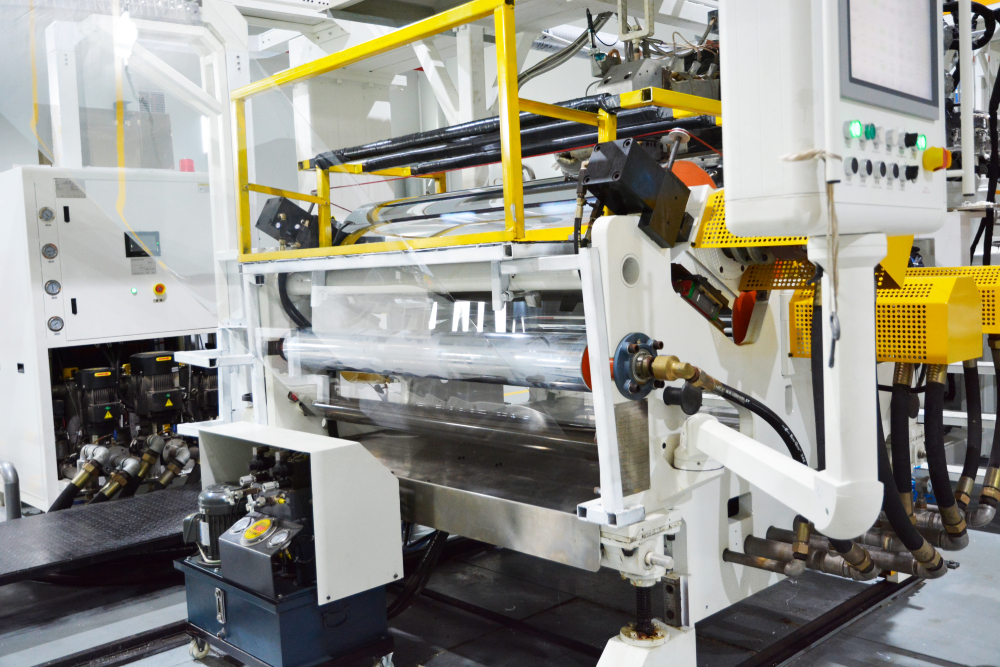
Manufacturing base: 20,000㎡ facility, 14 co-extrusion production lines, annual output above 40,000 tons.
Manufacturing scale and continuity
Pulixin Packaging Materials (Shanghai) Co., Ltd. was established in 2009 and has over 15 years of experience in manufacturing rigid plastic sheets. The company operates a 20,000㎡ production base with 14 advanced co-extrusion production lines, an annual output exceeding 40,000 tons and a workforce of 90 people, including an R&D team of 3 engineers. Around 80% of output is exported, with main markets in Southeast Asia, the Middle East, South America and Europe.
For a buyer planning years rather than weeks, that combination matters in a specific way: capacity above 40,000 tons per year supports both large-volume OEM orders and flexible customised production, so a specification does not have to be abandoned simply because annual volume grows.
Material and specification coverage
The range covers PET, PP and PS/HIPS thermoforming sheet rolls, including food-grade PET sheet roll, transparent PET sheet roll, vacuum forming plastic sheet roll and thermoformable plastic sheet roll. Performance-oriented variants include high stiffness, excellent formability, anti-fog and anti-static sheet rolls. Customisation covers thickness, width, colour matching, surface finish options, multilayer co-extrusion structures, food-grade material solutions and OEM production.
One published capability worth noting for frozen-food programs: PULIXIN offers food-grade PP sheet rolls specifically optimised for frozen food trays with impact-resistant copolymer options.
Quality control that produces acceptance evidence
Raw materials are selected and inspected before production. During manufacturing, every batch undergoes quality control covering thickness tolerance, width accuracy, transparency, mechanical properties and thermoforming performance. In practice this is what converts a supplier's internal control into a buyer's acceptance record — the batch-level data a purchasing team needs when the same specification is ordered for the fifteenth time.
Step-by-Step Breakdown: Setting Up a Supply Agreement That Holds
Step 1 — Write the order and acceptance protocol before the first purchase order
Purchasing terms should be documented per specification, not summarised once for the whole relationship:
- MOQ depends on material, thickness, width, colour and customisation requirements, and should be confirmed for each specification.
- Delivery terms are EXW, FOB or CIF, with other Incoterms available upon agreement.
- Payment terms are T/T, with specific terms subject to order value, customer requirements and mutual agreement.
- Acceptance criteria cover specification verification, thickness and width inspection, appearance inspection and finished-product quality inspection before shipment.
- Third-party inspection is available upon request.
Step 2 — Re-baseline the specification when changing suppliers
Do not compare suppliers only by material name, nominal thickness and price. Before switching, compare actual sheet structure, thickness tolerance, width, roll configuration, colour or transparency, forming behaviour and application requirements, together with the required compliance documentation. The safest method is to treat the currently proven sheet as the comparison baseline: confirm equivalent specification and documentation first, then run a controlled production trial before moving to regular-volume orders.
Step 3 — Specify roll width, roll diameter and core against the machine
Roll dimensions should match the customer's thermoforming and feeding equipment. Roll width is normally determined by mould layout, product arrangement and trim allowance. Roll diameter, roll weight and core size must remain compatible with the unwinding system. For an existing line, provide the current roll specification or the equipment limits. For a new mould, calculate sheet width from the mould layout plus the necessary trim allowance, then confirm roll diameter, weight and core size against the unwinding equipment before production. Correct roll specifications reduce unnecessary trim waste and prevent handling or feeding problems.
Step 4 — Match the roll to the downstream process, not just to the machine
Compatibility runs further than the former. Vacuum forming and pressure forming place different demands on the sheet than high-speed thermoforming; blister packaging depends on consistent thickness and clean surface; die-cutting depends on dimensional stability and flatness; sealing depends on the material structure being compatible with the sealing method. In PET, thermoforming typically occurs between 130°C and 160°C (266–320°F), which is why heating uniformity and forming window control stay part of the supply conversation rather than a one-time setup task.
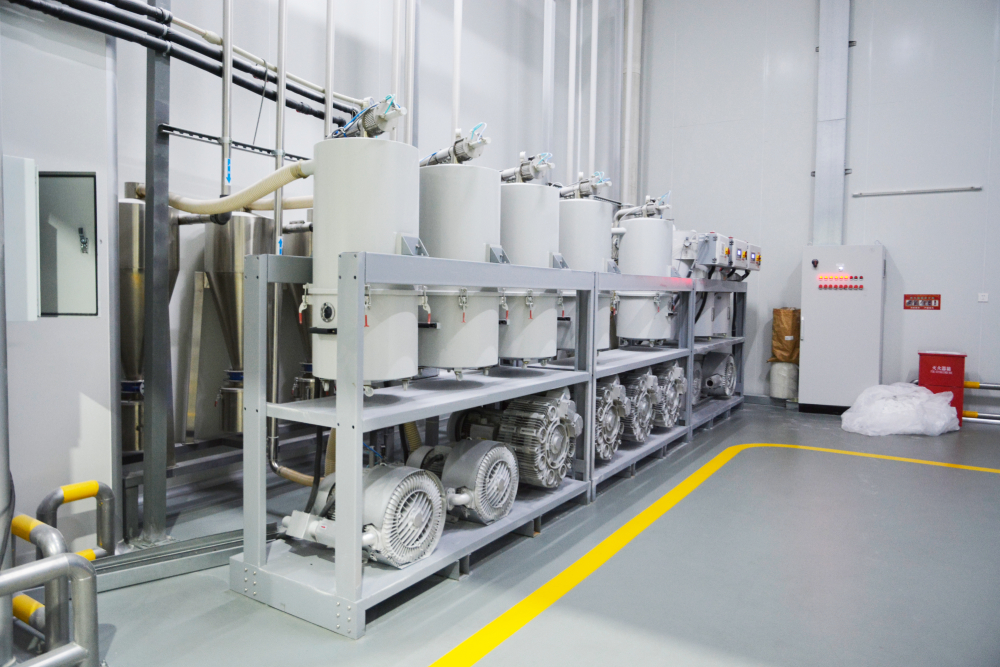
Step-by-step control: specification verification, thickness and width inspection, appearance inspection and finished-product quality inspection before shipment.
Step 5 — Run a controlled qualification trial, one variable at a time
Avoid changing material structure, thickness and process settings simultaneously, because this makes the source of any forming difference impossible to identify. Provide the finished-part drawing or a sample, the material preference, sheet thickness, width, finished-product dimensions, forming depth, machine information and performance requirements. A photo of the part is useful but rarely sufficient on its own.
Step 6 — Fix storage and after-sales conditions in the agreement
After-sales support for sheet rolls is largely about conditions rather than repairs. Clean, dry, temperature- and humidity-controlled processing and storage conditions protect flatness and feeding behaviour. Storage method should follow the supplier's packaging and handling recommendations to avoid roll deformation or edge damage. If curl appears, separate material, storage and machine factors before adjusting production — and check sheet flatness, roll alignment, tension and whether the roll was deformed during transport or storage. Temperature, humidity, direct sunlight, packaging condition and storage time can all influence sheet condition before processing.
Use Cases: Where Long-Term Roll Consistency Actually Shows Up
Refrigerated food and fresh meat trays. Refrigerated packaging requires more than good room-temperature forming performance: low-temperature behaviour, tray rigidity, impact resistance, condensation, sealing requirements and the actual food-contact conditions all matter. Material and thickness should be selected against the finished tray and storage environment, not copied from an ambient-packaging specification. Anti-fog sheet is relevant when condensation forms inside clear packaging and product visibility must be maintained.
Frozen food trays. Food-grade PP sheet rolls optimised for frozen food trays with impact-resistant copolymer options are available from PULIXIN for programs where low-temperature toughness and temperature performance are the deciding criteria.
Blister packaging for electronics and cosmetics. Not every electronics package requires anti-static or ESD material; the requirement depends on component sensitivity and the customer's electrostatic-control system, so the required electrical property range should be confirmed before selecting the sheet. HIPS is commonly suitable for many thermoformed trays because of its forming behaviour and impact resistance, while transparent PET is typically chosen where product visibility drives the pack design.
Cups and dairy containers. Cup depth, rim geometry, stacking, filling temperature, sealing method, stiffness and forming speed all influence material choice. PP and PS are commonly used for cup applications, while PET may be selected for certain clear packaging and lid applications depending on design.
Medical and pharmaceutical trays. Consistent thickness, forming stability, dimensional stability, surface cleanliness and suitable mechanical performance are commonly the important properties. A general-purpose plastic sheet should not automatically be described as medical grade without supporting requirements and documentation, and food-contact compliance cannot substitute for medical-packaging requirements.
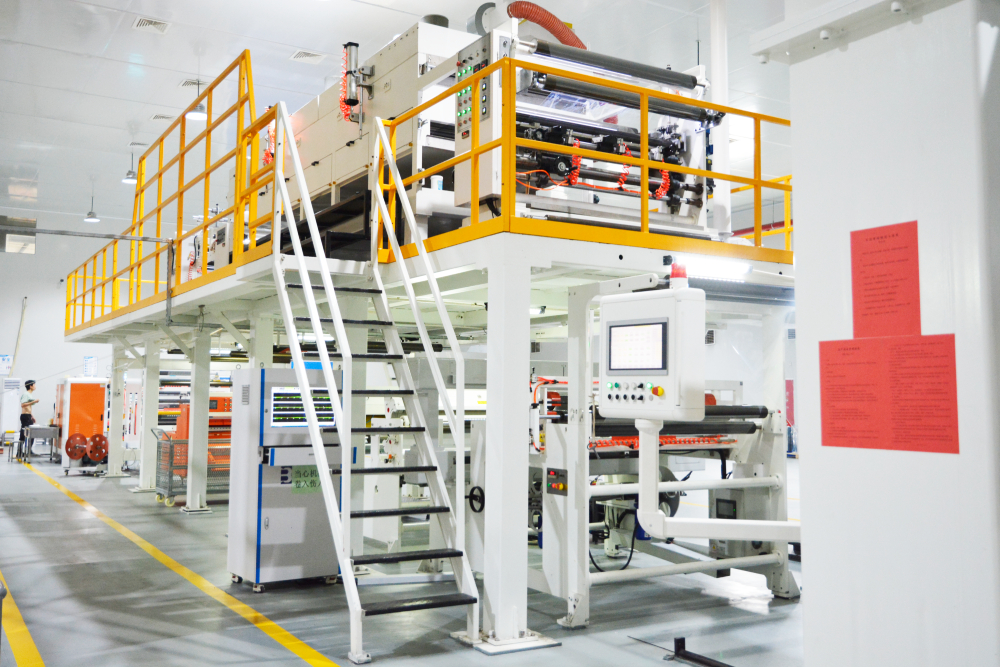
Batch control covers thickness tolerance, width accuracy, transparency, mechanical properties and thermoforming performance.
Comparison Tables: The Facts Buyers Re-Confirm Each Contract Year
The tables below use only sourced material and commercial facts. No fixed universal percentage applies to impact strength, stiffness or energy use, because those depend on grade, thickness, structure and forming conditions.
| Material pair | Sourced difference | Selection implication |
|---|---|---|
| PP vs PET | PP offers lower density and better suitability where higher temperature resistance is required; PET generally offers higher transparency and stiffness. Typical density: PP approximately 0.90–0.91 g/cm³, PET approximately 1.33–1.40 g/cm³; actual values depend on grade and formulation. | PP for thermoformed cups, dairy and food containers; PET for clear trays, clamshells and blister packaging. |
| HIPS vs PET | HIPS offers good impact resistance, easy thermoforming and flexible colour options; PET is generally preferred where high transparency is required. | HIPS for opaque trays, electronics packaging and coloured blister inserts; PET for transparent food packaging, clear blisters and display packs. |
| HIPS vs GPPS | HIPS provides better impact resistance and toughness; GPPS is generally more rigid and transparent but more brittle. | HIPS for trays, electronics and consumer-goods packaging; GPPS where clarity and rigidity outweigh impact resistance. |
| rPET vs virgin PET | rPET incorporates recycled PET content; recycled content can be customised per specification and compliance requirement, and the actual percentage must be confirmed for each product or order. rPET is not necessarily cheaper than virgin PET. | Relevant where recycled-content requirements exist; processing conditions may need adjustment according to recycled content, IV and sheet structure. |
| Mono PET vs PET/PE laminated | Mono PET is a simpler single-material structure; PET/PE combines PET rigidity with a PE sealing layer for applications requiring heat sealing. | Mono PET for trays, clamshells and blisters without a dedicated PE sealing requirement; PET/PE for meat and fresh-food trays needing compatible heat-sealing performance. |
| APET vs PETG | APET offers a practical balance of transparency, stiffness and cost for high-volume thermoformed packaging; PETG is often selected where easier forming or more demanding forming geometry is required. | APET for food trays, blister packs and clamshells at volume; PETG for complex or deeper parts where forming behaviour is the higher priority. |
| Commercial item | Confirmed position |
|---|---|
| MOQ | Depends on material, thickness, width, colour and customisation requirements; confirmed per specification. |
| Delivery terms | EXW, FOB, CIF; other Incoterms available upon agreement. |
| Payment terms | T/T; specific terms subject to order value, customer requirements and mutual agreement. |
| Acceptance criteria | Specification verification, thickness and width inspection, appearance inspection, finished-product quality inspection before shipment. |
| Third-party inspection | Available upon request. |
FAQ: Orders, Specification and After-Sales Support
1. Which food-contact documentation should a long-term sheet roll supplier be able to confirm?
Food-contact compliance has to be verified against the specific material, the test report, the intended application and the destination market — not against the phrase “food grade”. In the European Union, Regulation (EU) No 10/2011 governs plastic materials and articles intended to come into contact with food, so a roll for that market must be assessed against that framework together with the buyer's own specification. Food-contact compliance and medical-packaging requirements address different applications and are not interchangeable. For a multi-year file, keep the material grade, the compliance document and the finished application together, and re-confirm all three whenever the grade, structure or destination market changes.
2. Can one supplier hold PET, PP and HIPS specifications stable across a multi-year programme?
Only if the specification is written at the level the supplier actually controls. PULIXIN manufactures PET, PP and PS/HIPS thermoforming sheet rolls on 14 co-extrusion production lines with annual output above 40,000 tons, and batches are controlled for thickness tolerance, width accuracy, transparency, mechanical properties and thermoforming performance. Material changes still require re-qualification: different materials have different shrinkage, heating and forming behaviour, so machine settings — and sometimes tooling — need adjustment. No material should be swapped for another on the assumption that the mould will absorb the difference.
3. How do purchasing terms and cost structure work for repeat orders?
MOQ depends on material, thickness, width, colour and customisation requirements and must be confirmed per specification. Delivery terms are EXW, FOB or CIF, with other Incoterms available upon agreement, and payment is by T/T with specific terms subject to order value, customer requirements and mutual agreement. On cost, the lowest price per kilogram is not the lowest packaging cost: finished-package cost also depends on density, required thickness, forming yield, scrap utilisation, cycle stability and reject rate. PP's density of approximately 0.90–0.91 g/cm³ against PET's approximately 1.33–1.40 g/cm³ is one reason weight-based price comparisons can mislead over a multi-year contract.
4. How should we validate a new roll specification before committing to a multi-year order?
Use the currently proven sheet as the comparison baseline, confirm equivalent specification and required documentation first, then run a controlled production trial before regular-volume orders. Provide the finished-part drawing or a sample, material preference, sheet thickness, width, finished-product dimensions, forming depth, machine information and any special performance requirements. Change one variable at a time — material structure, thickness and process settings should not move together — and use third-party inspection if the qualification needs independent verification.
5. What keeps forming performance repeatable over several years of supply?
Three controls do most of the work: a specification that is not re-interpreted between orders, roll dimensions and winding that stay compatible with the unwinding system, and processing conditions that are clean, dry and controlled for temperature and humidity. When curl or feeding problems appear, separate material, storage and machine causes before changing anything — temperature, humidity, direct sunlight, packaging condition and storage time can all influence sheet condition before processing, and storage method should follow the supplier's handling recommendations to avoid roll deformation or edge damage. PULIXIN supports this with over 15 years of sheet manufacturing experience, annual capacity above 40,000 tons and export experience in more than 55 countries. To start a long-term programme, send your current roll specification, finished-part drawing and estimated annual volume to operation01@pulixin.com for a trial roll and quotation.
Conclusion: Contract the Controls, Not Just the Kilograms
A thermoforming sheet roll partnership survives on documentation and repeatability. Write the purchasing and acceptance protocol per specification. Re-baseline the sheet structure, tolerance, width and roll configuration before any supplier change. Specify roll width from mould layout and trim allowance, and confirm diameter, weight and core against the unwinding system. Qualify with a controlled trial that changes one variable at a time. Then protect the programme with clean, dry, temperature- and humidity-controlled storage and an after-sales process that separates material, storage and machine causes before anything is re-specified.
Everything else — material grade, transparency, colour, multilayer structure, food-grade options, OEM production — sits on top of that foundation, which is why buyers who plan in years evaluate a supplier's controls before they evaluate a price list.
Next step: trial roll, specification review and quotation for multi-year sheet roll supply.
Start with one specification, then scale
Send your current roll specification or finished-part drawing, application and estimated annual volume. PULIXIN will review PET, PP or PS/HIPS options, roll width, diameter and core, and confirm MOQ and delivery terms for the specification.
Email: operation01@pulixin.com · Tel / WhatsApp: +86 13818585204
Website: www.pulixin.com
Catalogue: PULIXIN Catalogue (PDF)
Pulixin Packaging Materials (Shanghai) Co., Ltd.
No.32 Lubin Rd, Luyuan Industrial Zone, Pudong, Shanghai, China
Founded 2009 · 20,000㎡ production base · 14 co-extrusion production lines · annual output above 40,000 tons · 90 employees · exports to 55+ countries
Have Questions or Need More Details?
Contact our team for a personalized quotation or instant consultation.
Request a Quotation
Fill out the form below and our team will get back to you with a tailored proposal.
WhatsApp Direct Chat
Prefer to chat in real-time? Message us on WhatsApp for instant assistance & quick answers.
- Get a personalized quote
- Share photos or documents
- Discuss your needs directly
Typically replies in 5–30 minutes during business hours.