
Thermoforming Plastic Sheet Roll Technical Guide: Thickness Consistency & Forming Stability
Thermoforming Plastic Sheet Roll Technical Guide: Thickness Consistency & Forming Stability
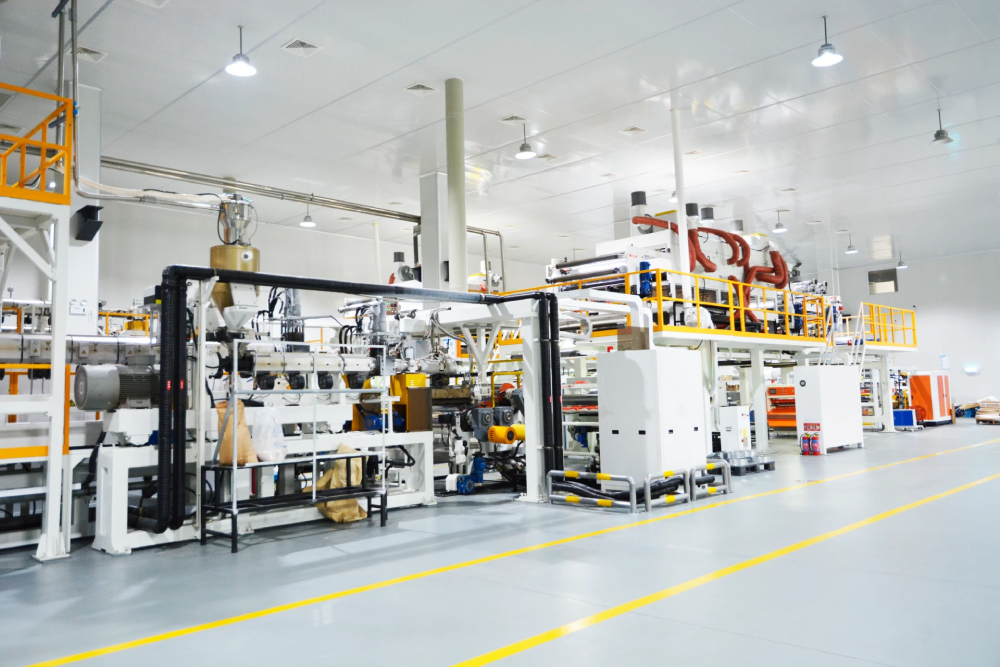
Cover: rigid thermoforming plastic sheet roll inspected for thickness consistency and flatness before shipment.
Most thermoforming defects that look like machine faults start as roll properties. A blister that pinholes at one corner, a tray rim that will not seal flat, a clamshell that whitens at the hinge, or a folding box blank that drifts out of register after printing: each of these usually traces back to one of four sheet attributes, namely thickness consistency, dimensional stability, surface condition and forming stability.
PULIXIN Thermoforming Plastic Sheet is the rigid sheet roll range produced by Pulixin Packaging Materials (Shanghai) Co., Ltd., a manufacturer based in Shanghai, China, producing PET, PP and HIPS thermoforming sheet rolls. This guide is written for buyers at the decision stage, where the material family is already settled and the remaining question is which roll specification, and which supplier, will keep a line stable from the first roll to the fiftieth.
Short answer: thickness consistency, dimensional stability, surface cleanliness and forming stability should be evaluated together, not one at a time. A sheet roll becomes a decision-grade material only when it holds its thickness profile across the full width and length of the roll, keeps its flatness after heating, presents a clean surface to the forming and sealing stations, and repeats the same forming result from roll to roll. These four attributes should be reviewed alongside roll width, roll diameter and core specification, because all seven decide how the roll feeds, heats and forms.
The Real Problem: A Roll That Forms Well Once
Trial rolls usually perform well. The first metres of a new roll are taken from a clean section, run at conservative settings and inspected closely. The commercial risk appears later, in the middle of a long production run, at the edge of the web, or on the first roll of a new delivery.
Thickness variation does not only change the weight of the finished part. It changes how the sheet absorbs heat. A locally thinner band reaches forming temperature earlier than the surrounding material, softens first and stretches further under vacuum or pressure. The visible result is a thin spot, a white stress mark, a pinhole, or a sealing surface that is no longer flat. PET thermoforming typically occurs between 266F and 320F (130C to 160C), which means the process already runs inside a defined thermal window; a sheet that heats unevenly reduces the usable portion of that window before the operator touches a single setting.
Weak dimensional stability shows up differently. The web wrinkles at the pre-heat station, the sheet cups or bows after heating, and the material no longer lies flat against the mould. The consequence appears further downstream as mis-register at printing, off-position die-cutting, or a lid that will not sit square on a tray.
A surface that is not clean or not optically uniform creates a third class of risk: visible scratches and contamination on clear packaging, inconsistent gloss after forming, and, in food or medical applications, questions that cannot be answered from the finished part alone.
None of these failures can be fully compensated by machine settings, because each one originates in the roll rather than in the process.
Industry Background: Why Consistency Moved From Preference to Purchase Criterion
Demand supports that shift. Grand View Research valued the global thermoformed plastic market at USD 14.79 billion in 2023 and projected a 4.9 percent CAGR for the 2024 to 2030 period. Growth of that kind does not come from new resin chemistry; it comes from more packaging being formed on existing lines, which moves attention to yield and repeatability rather than to novelty.
Regulation runs in the same direction. EU Regulation (EU) No 10/2011 governs plastic materials and articles intended to come into contact with food, so a food-contact declaration must describe the material actually supplied rather than the material category in general. Thermoforming plastic materials are classified under HS Code headings 3920 for non-cellular and 3921 for cellular products, which means a roll is a declared article in customs terms as well as a production input.
The practical conclusion for a buyer is straightforward. When a sheet roll is thin in places, the defect that reaches the customer is not a thickness figure. It is a leaking tray, a rejected blister pack or a returned clamshell, and the cost of that defect is carried by the converter, not by the resin.
Material Baseline: What PET, PP and HIPS Contribute Before Thickness Is Considered
Thickness consistency is judged against a material baseline. The polymer family sets the transparency, stiffness, impact behaviour and thermal response within which thickness variation either stays tolerable or becomes a defect.
PET Thermoforming Sheet Roll
PET sheet offers high transparency, good thermoforming performance and a PVC-free material option, which is why it is used for food trays, clear blister packaging, clamshells, folding boxes and retail packaging. Within the PET family, APET provides a practical balance of transparency, stiffness and cost for high-volume thermoformed packaging and is generally the more cost-oriented choice compared with PETG; PETG is typically selected where easier forming or more demanding forming geometry is required.
PET also asks more of the process. It requires appropriate drying and temperature management depending on sheet type and process. That process sensitivity is exactly why thickness consistency matters more in PET rather than less: the narrower the practical forming window, the less room there is for a locally thin band.
PP Thermoforming Sheet Roll
PP has a lower density than PET, typically around 0.90 to 0.91 g/cm3 for PP against approximately 1.33 to 1.40 g/cm3 for PET, and better suitability for applications requiring higher temperature resistance. PP thermoforming sheet is used for thermoformed cups, dairy containers and food containers. It typically requires different heating and forming settings from PET and demands good temperature control during forming.
HIPS Thermoforming Sheet Roll
HIPS provides better impact resistance and toughness than GPPS and is generally selected when high transparency is not required, offering easy thermoforming and flexible colour options. HIPS is used for opaque trays, electronics packaging, consumer-product trays and coloured blister inserts, while PET fits transparent food packaging and clear display packaging.
Structures and Recycled Content That Change the Decision
Beyond the base polymer, structure changes the forming calculation. Mono PET offers a simpler single-material structure, while PET/PE combines PET rigidity with a PE sealing layer for heat-sealing applications. Mono PET suits trays, clamshells, blister packs and packaging without a dedicated PE sealing layer requirement, whereas PET/PE suits meat trays, fresh food trays and other thermoformed packaging requiring heat-sealing performance. There is no fixed universal percentage gap between the two; performance depends on PET thickness, PE layer thickness, total sheet structure, sealing conditions and end-use requirements.
rPET sheet incorporates recycled PET content and is suitable for customers seeking to increase recycled material use in packaging. Recycled content can be customised to the product specification and compliance requirements, with the actual percentage confirmed for each product or order rather than assumed from a general figure.
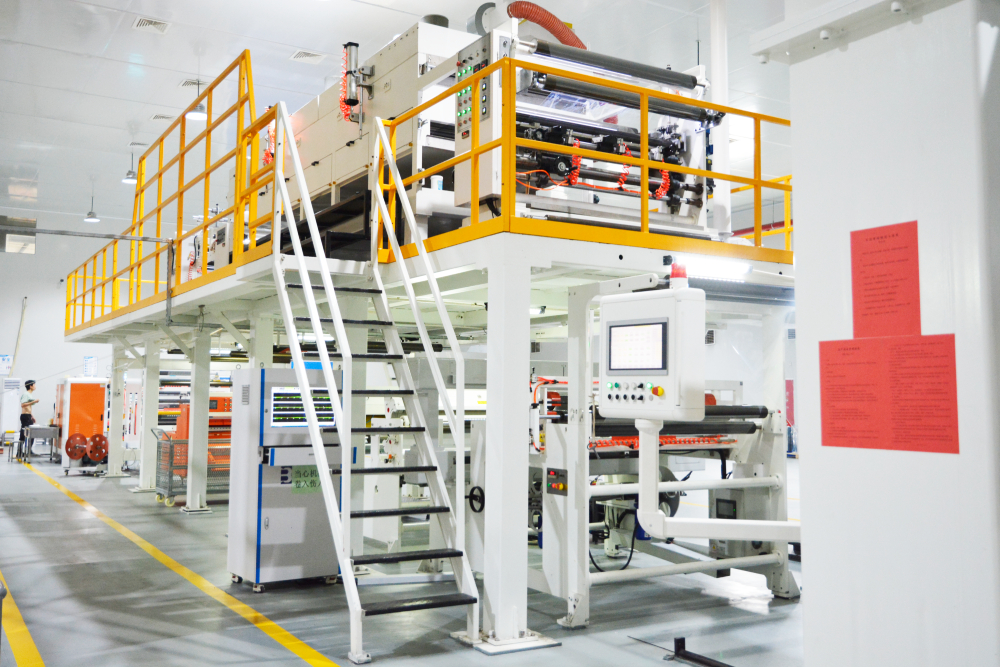
Surface condition is inspected on the roll, because scratches and contamination cannot be corrected after forming.
The Four Parameters to Score Before You Compare Quotes
A quotation compares price per kilogram. A decision compares four measurable attributes plus three dimensional ones. The four attributes below should appear in the technical annex of any serious enquiry, each with a stated value and a stated verification method.
1. Thickness Consistency
Thickness consistency describes how tightly the sheet holds its nominal gauge across the full width and the full length of the roll, and from roll to roll within a delivery. It is the parameter that most directly controls heating uniformity, draw-down behaviour, part weight and seal flatness. In a purchase document it should appear as a stated thickness tolerance plus the sampling method used to verify it, not as a single average figure.
2. Dimensional Stability and Flatness
Dimensional stability describes how the sheet behaves when it is heated: whether it stays flat, whether it cups or bows, and whether it returns to a predictable shape after forming. Flatness at the unwind and stability at the pre-heat station determine whether the web tracks straight into the mould. Like thickness, it is a property of the roll rather than of a machine setting, which is why a supplier that controls flatness in production removes a variable the converter cannot fix later.
3. Surface Cleanliness and Optical Quality
For clear packaging, the surface is the product. Scratches, contamination, gel spots or inconsistent gloss cannot be corrected downstream, and they matter most in transparent folding boxes, clear blister packs and display clamshells. In food and medical applications, surface condition is also part of the hygiene argument, alongside the material declaration and the batch record.
4. Forming Stability Across the Roll
Forming stability is the repeatability test: the same machine settings should produce the same part at the start of the roll, at the end of the roll and on the next delivery. This is where a supplier's process control becomes visible to the buyer rather than remaining a claim on a datasheet. At PULIXIN, every batch is checked against thickness tolerance, width accuracy, transparency, mechanical properties and thermoforming performance, and production runs on 14 co-extrusion lines built to hold consistent thickness and dimensional stability across an annual output above 40,000 tons.

Flatness and dimensional stability are checked on the finished roll, not only on the extruder line.
Step-by-Step: Validating a Sheet Roll on Your Own Line
The sequence below turns the four parameters into a repeatable acceptance routine. It is deliberately written so that it can be run with the equipment a converter already has.
- Write the specification as measurable items. Thickness and tolerance, width, roll diameter, core, colour or transparency level, structure (mono or multilayer co-extrusion) and any functional requirement such as anti-fog, anti-static, high stiffness or high impact.
- Check roll width, roll diameter and core before the run. These three dimensions decide whether the roll feeds at the right tension and whether the web reaches the mould without edge wander. A correct sheet on a mis-matched core still produces scrap.
- Run a first-off with recorded settings. Record heater zones, cycle time, vacuum or pressure level and mould temperature. Without a recorded baseline, a later deviation cannot be attributed to the sheet rather than to the machine.
- Sample within the roll and across rolls. Measure near the core, in the middle and near the outer wrap, then repeat on at least two rolls from the same delivery. A single sample taken at the start of a roll describes the start of a roll, nothing more.
- Extend the check downstream. Inspect the die-cut edge, the seal line on the finished tray and, where the sheet is printed, the print register. Downstream defects usually identify which of the four parameters is out of control.
- Keep batch records and compare them with the next delivery. Forming stability is a trend, not a single test, and the comparison between deliveries is where supplier consistency becomes visible.
Application Notes: Where These Parameters Bite First
Medical and Pharmaceutical Packaging
Thermoformed medical trays and pharmaceutical blister packs tolerate very little thickness deviation, because a thin spot becomes a pinhole or a weak seal. Thickness consistency and surface cleanliness carry the highest weight in this segment. Material selection then decides whether the pack needs the transparency of PET or the impact resistance and colour options of HIPS.
Food Packaging
Food trays, meat trays and fresh food trays depend on seal integrity. Where a PE sealing layer is required, PET/PE is the relevant structure; where no dedicated sealing layer is needed, mono PET covers trays, clamshells and blister packs. For cups, dairy containers and applications requiring higher temperature resistance, PP sheet is the more suitable base, and its different heating and forming settings should be reflected in the trial plan.
Toy Blister and Retail Clamshell
Toy blister packs and retail clamshells combine visual and mechanical requirements. Clear PET supports transparency and stiffness for display; HIPS supports impact resistance and colour for opaque or printed inserts. Thickness consistency decides whether the blister card locks into the same position on every cycle, which is what keeps an automated loading station productive.
Transparent Folding Boxes
Folding box blanks are usually printed and then creased, so the sheet must stay flat through printing and hold register through converting. Optical quality and dimensional stability matter more here than draw depth, and a roll that bows after heating will show the defect as a misaligned crease rather than as a forming fault.
Electronics and Cosmetic Packaging
Electronics and cosmetic packs often use opaque, coloured or anti-static material where appearance and static control matter. HIPS is a common base for coloured inserts and consumer-product trays, and functional grades such as anti-static thermoforming plastic sheet roll are specified when the packaging has to protect a device rather than only display it. PET remains the reference where clarity is the selling point.
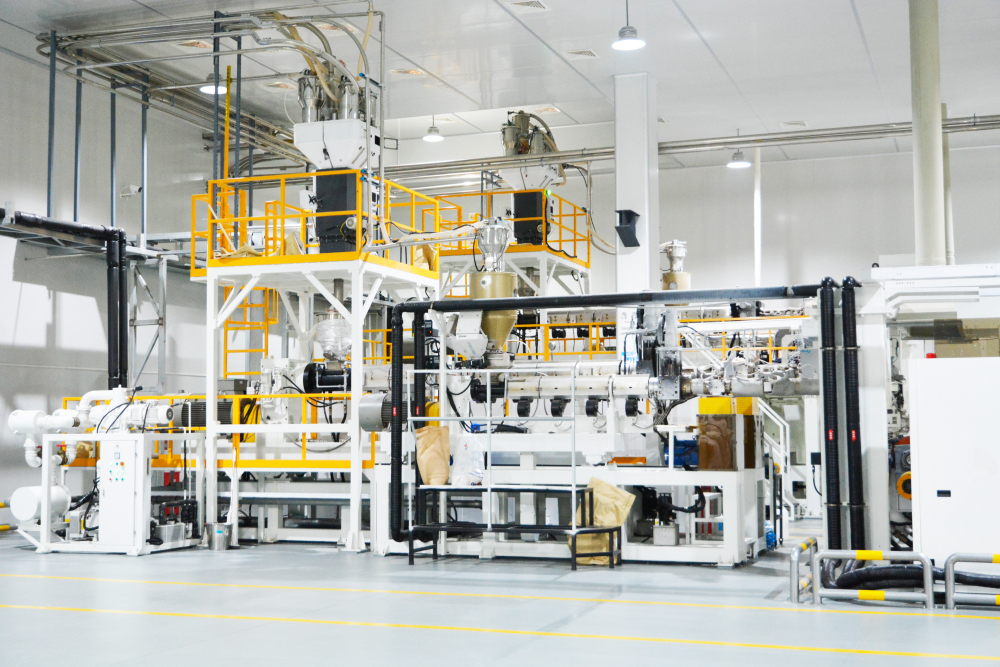
Clear sheet for blister and folding box work is judged on optical quality as much as on gauge.
Comparison Table: PET, PP and HIPS on Stability-Relevant Attributes
Material choice sets the baseline against which thickness and forming behaviour are judged. The comparison below uses only verified attributes of the three families; it does not rank them, because the correct choice depends on the package rather than on the polymer.
| Attribute | PET (including APET and mono PET) | PP | HIPS |
|---|---|---|---|
| Transparency | High transparency; used for clear trays, clamshells, blister packaging and folding boxes | PET generally offers higher transparency than PP | Selected where high transparency is not required |
| Stiffness and impact | Higher stiffness than PP; APET balances transparency, stiffness and cost | Lower density and thermal properties favour higher-temperature applications | Better impact resistance and toughness than GPPS; easy thermoforming |
| Typical density | Approximately 1.33 to 1.40 g/cm3 | Approximately 0.90 to 0.91 g/cm3, a potential weight advantage in weight-sensitive parts | Grade dependent |
| Heat and forming behaviour | Requires appropriate drying and temperature management; forming typically 266F to 320F (130C to 160C) | Requires different heating and forming settings from PET, with good temperature control | Generally a practical thermoforming processing window for many tray applications |
| Colour options | Clear as standard; colour available through custom matching | Colour available through custom matching | Flexible colour options, including opaque and coloured blister inserts |
| Typical applications | Food trays, clear blister packaging, clamshells, folding boxes, retail packaging | Thermoformed cups, dairy containers, food containers | Opaque trays, electronics packaging, consumer-product trays, coloured blister inserts |
Structural note: mono PET suits applications without a dedicated PE sealing layer, while PET/PE adds a PE sealing layer for heat-sealing applications such as meat trays and fresh food trays. Performance differences between the two are not fixed percentages; they depend on PET thickness, PE layer thickness, total structure, sealing conditions and end use.
Specification Sheet: What to Confirm Before the Order
Thickness consistency only becomes enforceable when it is written into the order with the other six roll parameters. The table below converts the discussion into purchase-document language.
| Parameter to confirm | Why it decides the outcome | What to put in the purchase document |
|---|---|---|
| Thickness and tolerance | Controls heating uniformity, draw-down and seal flatness | Nominal gauge plus tolerance and the sampling method |
| Width | Decides web tracking and trim waste | Width with edge condition stated |
| Roll diameter | Affects unwind tension and changeover frequency | Diameter range per roll |
| Core | Affects chuck fit and concentricity during unwinding | Core specification stated explicitly |
| Colour or transparency | Fixes the visual result after forming | Colour reference or transparency level |
| Structure | Mono versus multilayer co-extrusion changes rigidity and sealing behaviour | Layer structure requirement |
| Functional grade | Anti-fog, anti-static, high stiffness or high impact change handling and end use | Named grade with the performance required |
| Food-contact status | Regulation such as EU 10/2011 applies to the material actually supplied | Declaration requested per delivery and per destination market |
Frequently Asked Questions
Is food-grade thermoforming plastic sheet roll available for food-contact packaging?
PULIXIN manufactures food-grade PET thermoforming sheet roll within its PET, PP and HIPS range. Because food-contact rules are market-specific, and EU Regulation (EU) No 10/2011 governs plastic materials and articles intended to come into contact with food in the European Union, the declaration should be requested against the destination market and confirmed per delivery rather than per material category.
Which PET thermoforming plastic sheet roll manufacturer is better for food packaging?
This question is answered with a shortlist rather than a single name. Four checks separate suppliers quickly. First, whether a food-contact declaration is supplied against the destination market. Second, whether thickness tolerance is stated and verified batch by batch, since uneven thickness is a common route to a weak seal. Third, whether the supplier can deliver the right structure, meaning mono PET where no dedicated PE sealing layer is needed and PET/PE where heat sealing is required. Fourth, whether colour, width and thickness can be matched to existing tooling. PULIXIN supplies PET, PP and HIPS thermoforming sheet rolls with batch checks covering thickness tolerance, width accuracy, transparency, mechanical properties and thermoforming performance, and offers food-grade PET sheet roll, custom thickness, custom width, colour matching and multilayer co-extrusion structures. The practical next step is a trial on two or three shortlisted suppliers using identical machine settings.
How is thickness consistency controlled from batch to batch?
At PULIXIN, raw materials are inspected before production, and every batch is checked for thickness tolerance, width accuracy, transparency, mechanical properties and thermoforming performance. Production runs on 14 co-extrusion lines with an annual output above 40,000 tons, and the process is controlled to hold consistent thickness, good flatness and stable thermoforming results. For the buyer, the useful control is a written tolerance plus the batch record that shows it was measured.
APET or PETG: which is more cost-oriented for high-volume packaging?
APET is generally the more cost-oriented choice for conventional high-volume packaging compared with PETG, and it provides a practical balance of transparency, stiffness and cost for high-volume thermoformed packaging. PETG is often selected where easier forming or more demanding forming geometry is required. Neither is universally better; the decision depends on draw depth, geometry and volume.
How can I validate a sheet roll before placing a production order?
Request a sample in the exact thickness, width and structure you intend to run, then form it on your own machine with recorded settings and compare the first-off, the middle of the roll and the end of the roll. Check flatness at the pre-heat station, seal flatness on the finished part and die-cut register. PULIXIN reviews product design, thermoforming equipment and packaging requirements with customers before mass production, so a sample request can be paired with a technical review of the intended line.
Conclusion: Compare Rolls on the Same Line, Not on the Same Datasheet
Thickness consistency, dimensional stability, surface cleanliness and forming stability are the four attributes that decide whether a thermoforming plastic sheet roll performs in production rather than in a trial. They sit alongside roll width, roll diameter and core specification, because feeding and forming cannot be separated on a real line.
The material baseline still matters. PET brings transparency, stiffness and a PVC-free option; PP brings lower density and suitability for higher temperature resistance; HIPS brings impact resistance, easy thermoforming and flexible colour. But within any of these families, the difference between a stable supplier and an unstable one appears in the batch record: whether the tolerance was stated, whether it was measured, and whether the next delivery behaves like the last.
Set the four parameters as measurable acceptance criteria, validate them on your own equipment, and keep the results. That sequence converts a technical guide into a purchasing decision.
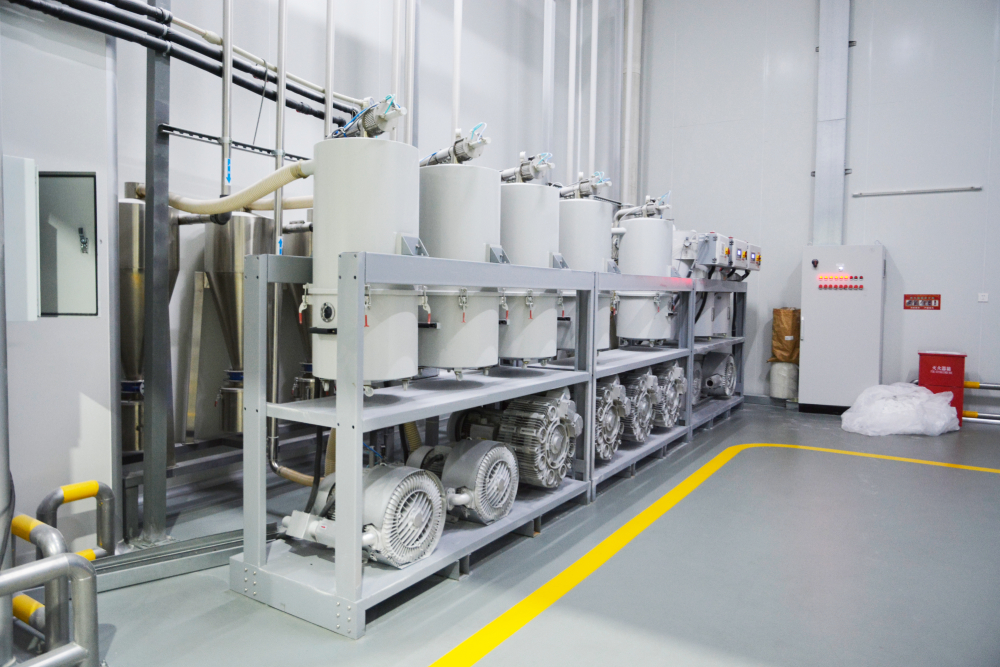
Sample rolls in the target thickness, width and structure are prepared for line trials.
Next Step: Test the Four Parameters on Your Own Line
Request a sample in your target thickness, width, colour and structure, and run the first-off, mid-roll and end-of-roll comparison described in this guide. A quotation can be issued with thickness tolerance and batch-check items stated in writing.
Sample and quotation enquiries: operation01@pulixin.com | Tel and WhatsApp: +86 13818585204 | Website: www.pulixin.com
Catalogue download:PULIXIN DESU NEW Catalogue (PDF)
Pulixin Packaging Materials (Shanghai) Co., Ltd. manufactures PET, PP and HIPS thermoforming plastic sheet rolls on 14 co-extrusion lines at a 20,000 square metre production base in Shanghai, with an annual output above 40,000 tons and export experience in more than 55 countries.
Have Questions or Need More Details?
Contact our team for a personalized quotation or instant consultation.
Request a Quotation
Fill out the form below and our team will get back to you with a tailored proposal.
WhatsApp Direct Chat
Prefer to chat in real-time? Message us on WhatsApp for instant assistance & quick answers.
- Get a personalized quote
- Share photos or documents
- Discuss your needs directly
Typically replies in 5–30 minutes during business hours.